


How one Truist teammate is making finance fun for young readers
NORTHAMPTON, MA / ACCESS Newswire / April 6, 2026 / This story was originally published on the Truist Newsroom.
Teammate to Know: Craig Robinson
Investment advisor Craig Robinson had an "A-ha!" moment during his bedtime storytelling routine with his daughters, inspiring the Bull and Bear financial literacy series. He introduced his first book in April 2022.
Craig saw a gap in children's books about money and investing, noting they lacked an essential element: "FUN!" His vibrant characters, Bull, the optimistic investor, and Bear, the cautious saver, make financial topics accessible for kids aged three to nine.
In honor of National Financial Literacy Month this April, Robinson was interviewed about his book and how it's impacting young readers.
Describe the Bull and Bear series' storyline?
The series brings essential financial concepts to life through engaging contrasting characters and rhyming text.
Bull is Mr. Investor-aggressive, tech-savvy, always seeking new ways to diversify, and eternally optimistic (a nod to the classic "bull market").
Bear is more old-school, preferring safe investments, often cautious, and still relying on the morning newspaper.
Here's a synopsis of the books:
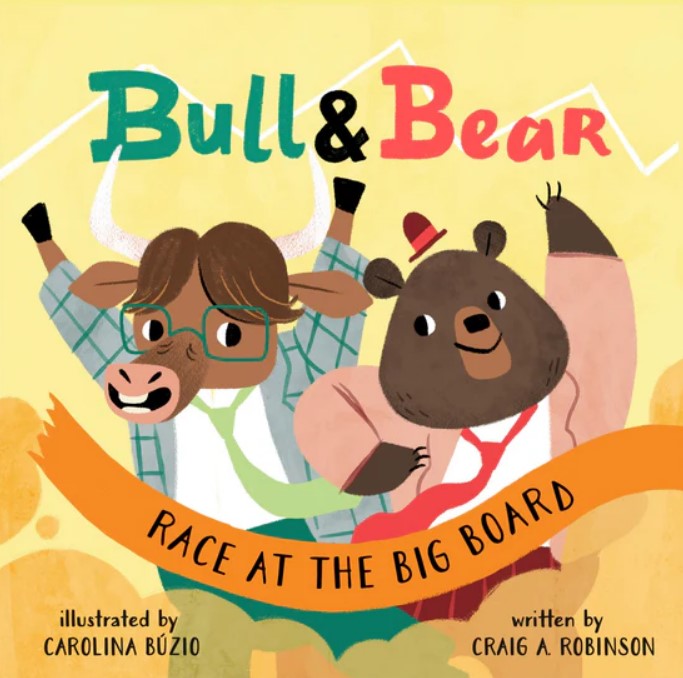
• "Race at the Big Board" introduces Bull and Bear and their two wildly different investment strategies.
• "Learn Piggy Banks' Golden Rule" shows Bear how to save for a shiny red bike with the help of the new character: Piggy Banks.
• "Build a Bright Future with Bonds" helps Bull and Bear discover the importance of diversifying their portfolios with bonds, while also learning about giving and investing in their communities.
(All of the books contain a glossary of financial terms covered in the back.)
How did you come up with characters like Bull, Bear, Piggy Banks, and Eagle to explain financial concepts to kids?
I leveraged concepts that already exist in the financial world. We are (mostly) familiar with a Bull market which is when stock prices rise and a Bear market which is when stock prices fall. This illustrates opposing investment strategies.
A piggy bank is the most recognizable early lesson on saving; I also wanted to introduce a female character to the series. For the concept of a trusted advisor-which is my day job at Truist- an Eagle was the ideal symbol to represent the treasury and government finance, given its iconic status in the U.S. I simply took these existing ideas and gave them fun, engaging personalities.
How did you decide which topics were "just right" for young readers to grasp without oversimplifying?
I understand why concepts like investing, stocks, and bonds are often left out of school curriculums; they are complex. In my opinion, children don't have to fully understand these advanced concepts; rather, they just need to be introduced to them in a friendly, non-intimidating way. Leveraging my background in investment advisory helped me simplify complex topics. For example, explaining saving and the need to earn money to get what you want (like in the Piggy Banks book) is a more relatable storyline for younger readers to grasp.

What's one financial concept you thought would be hard to explain to kids-but found a creative way to make it click?
The stock market. Sometimes my daughters who are ages 9, 8 and 6 will see me watching business news channels or Chief Investment Officer and Chief Market Strategist Keith Lerner on TV and they shout out, "Look, it's Bull's day!" The association they make between green up arrow to symbolize markets rising and the Bull character is incredibly strong at that age. While they might not fully grasp investment types, they get the fundamental concept that some days are "Bull days" (stocks going up) and some are "Bear days" (stocks going down). Seeing that color association clicking for them showed me that the character approach was the right strategy.
What's a moment when you saw your books spark a real financial conversation between a child and their parent or teacher?
I (know a reader) who is one of the biggest fans of my books who bought it when it was first published in 2022 for his 5-year-old. Now, years later, his child asks if he can read the book(s) to him instead, and he's opening a custodial account for his son, so they can buy and track stocks together. That, to me, is the ultimate success. It's about normalizing money as a topic at home that everyone can discuss. That's how we initiate real change-by starting the education and conversations early.
How do you hope your books shape the way kids think about money as they grow into adulthood?
My ultimate hope is that they make an investment early and learn to navigate the equity and fixed income markets and other financial opportunities without fear or a lack of confidence. If they establish a strong foundation-ways to earn money, maintaining a savings account, giving to charity, and perhaps holding an investment portfolio- then they've already proven how much they've gotten out of the series. They will be on a path to fulfilling their own financial destiny.
What do you do for work?
I work as an institutional investment manager in Truist Wealth's Institutional Investment management group. I help nonprofit clients manage their investments and create strategies so they can reach both their short-term and long-term financial goals.
To read the full interview, click here.

Find more stories and multimedia from Truist at 3blmedia.com.
Contact Info:
Spokesperson: Truist
Website: https://www.3blmedia.com/profiles/truist
Email: info@3blmedia.com
SOURCE: Truist
View the original press release on ACCESS Newswire:
https://www.accessnewswire.com/newsroom/en/banking-and-financial-services/storytime-and-stocks-1155064
