GENEVA, CH / ACCESS Newswire / April 9, 2026 / The Tire Industry Project (TIP) today announced the publication of a scientific study that introduces one of the most advanced models for understanding the movement and concentrations of tire and road wear particles (TRWP) in land and freshwater. The mass balance model as it is known presents a methodology to track and predict with high spatial granularity how TRWP move through watersheds - areas of land where rainfall and surface water drain into a river, lake or estuary - across diverse climates and regions.
TRWP are particles unintentionally generated at the frictional interface between the tire and roadway during vehicle use. As scientific and regulatory interest in these particles grows, tools that can generate reliable TRWP data are an essential prerequisite to understanding how they move through different environments. TRWP flow through waterways in particular remains an understudied topic.
The newly released model is designed to use global and local datasets and open-source modeling frameworks such as the ERA5 global climate dataset by the Copernicus Climate Change Service and the Wflow catchment hydrology model by Deltares, a water solutions research consultancy. Validated against field measurements from watersheds on three distinct continents - the Seine River basin in France, the Chesapeake Bay basin in the United States, and the Yodo River basin in Japan - the modeling approach is applicable at a watershed-scale in regions with varying watershed characteristics, climates and stormwater management systems.
Results of applying the model to the three above watersheds show substantial differences in how much TRWP reach surface waters, with amounts reaching estuaries ranging from 2% to 18%, depending on factors such as watershed basin size, level of urbanization, climate and stormwater management infrastructure. The study further indicates that factors like improvements in stormwater systems can reduce TRWP transport to surface waters by up to a half, underscoring the value of infrastructure-based mitigation measures.
"Having a robust, reproducible model for TRWP transport and fate that can be applied worldwide is essential for advancing both scientific understanding and practical solutions," said Nicolas Tissier, Research Director at TIP. "Our role at TIP is to support rigorous, transparent science that helps researchers, policymakers, and industry make evidence-based decisions. By making this model open access, we aim to support broader collaboration across the scientific community around TRWP in the environment, and to enable the development of more effective mitigation strategies."
The newly published model is a refinement of earlier work and extends the modeling approach to a global scale. The next phase of development is already underway, aiming to make the model accessible to users beyond the scientific community.
-ENDS-
Notes to editors:
The study Management-oriented modeling of tire and road wear particle fate and transport in the terrestrial and freshwater environment with a global perspective was published in the journal Water and is available to read here.
The study was authored by Jos van Gils (Deltares), Hélène Boisgontier (Deltares), Lora Buckman (Deltares), Steffen Weyrauch (Helmholtz Centre for Environmental Research-UFZ), Thorsten Reemtsma (UFZ and University of Leipzig), Timothy R. Barber (ERM), and Kenneth M. Unice (TRC Companies).
About TIP
Formed in 2005, the Tire Industry Project (TIP) is a voluntary CEO-driven initiative with a mission to anticipate, understand and address global environmental, social and governance (ESG) issues relevant to the tire industry and its value chain.?
TIP acts by commissioning independent research of the highest standards, collaborating on sectoral solutions and engaging with external stakeholders. ?
TIP is part of the World Business Council for Sustainable Development (WBCSD), bringing together 10 leading tire companies that represent more than 60% of the world's tire manufacturing capacity. ?
In 2025, TIP marked its 20th anniversary-a milestone that reflects its long-term commitment to advancing scientific knowledge and fostering collective industry action to improve sustainability across the tire value chain.?
For more information, visit The Tire Industry Project.
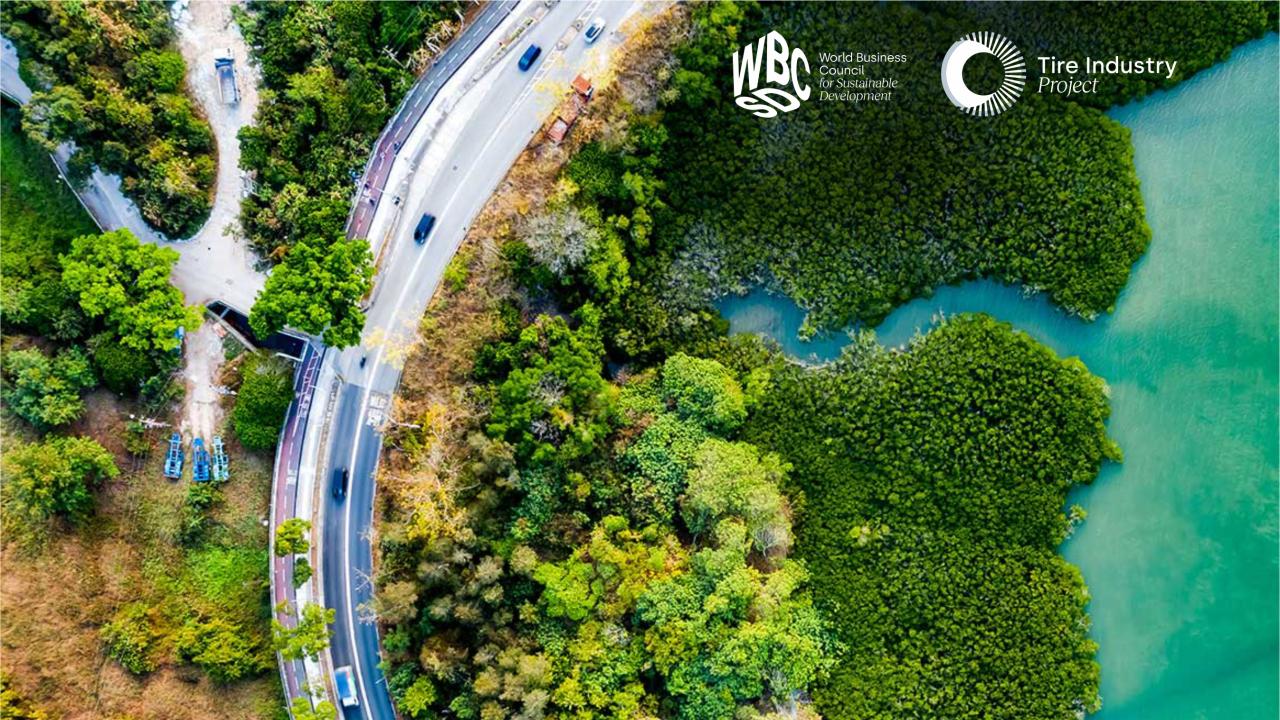
Tire Industry Project's mass balance model simulates movement of tire and road wear particles through soil and waterways
Find more stories and multimedia from Tire Industry Project at 3blmedia.com.
Contact Info:
Spokesperson: Tire Industry Project
Website: https://www.3blmedia.com/profiles/tire-industry-project
Email: info@3blmedia.com
SOURCE: Tire Industry Project
View the original press release on ACCESS Newswire:
https://www.accessnewswire.com/newsroom/en/business-and-professional-services/tire-industry-project-supported-study-introduces-advanced-model-1156402