Santo Domingo, Dominican Republic--(Newsfile Corp. - April 14, 2026) - Energía 2000 announced the commissioning of 414 megawatts of combined-cycle natural gas capacity at its Manzanillo Power Land facility, marking the largest single power generation addition in the Caribbean in over a decade and a defining milestone in the Dominican Republic's ongoing energy transition.
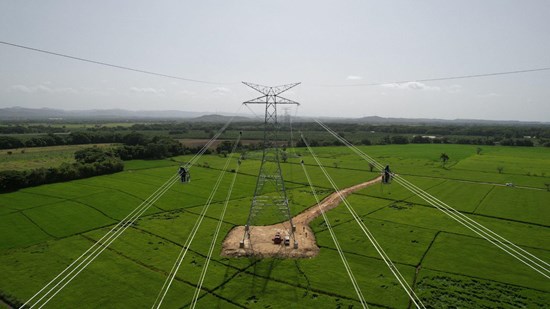
The project, which integrates Siemens Energy's highest-efficiency gas turbine technology, international operations management, and 128 kilometers of new 345kV transmission infrastructure, reflects both the scale and execution capacity that are increasingly positioning the Dominican Republic as one of the most dynamic energy markets in Latin America and the Caribbean.
RdNoticias
To view an enhanced version of this graphic, please visit:
https://images.newsfilecorp.com/files/8871/292153_74b397bd14535836_001full.jpg
The Caribbean Energy Problem and Market Differentiation
Most Caribbean nations continue to generate over 85% of their electricity by burning imported fossil fuels, resulting in some of the highest electricity costs globally. In many Eastern Caribbean markets, commercial tariffs exceed US$0.35 per kilowatt-hour-roughly three times the U.S. average-placing structural pressure on industrial development, tourism competitiveness, and public finances.
Scale as a structural advantage
Against this backdrop, Energía 2000 notes that the Dominican Republic has spent the last decade building a fundamentally different model. Its scale as the largest economy in the Caribbean-combined with sustained policy direction and regulatory evolution-has enabled the country to finance and execute infrastructure projects that smaller island systems cannot replicate.
That trajectory has been reflected in international assessments, including the World Economic Forum's 2025 Energy Transition Readiness framework, which highlighted the country's ability to attract over US$1 billion in energy investment while rapidly expanding renewable capacity.
The Numbers Behind the Transformation
The Manzanillo Power Land project sits within a broader transformation of the Dominican electricity sector, where multiple system components-generation, fuel mix, transmission, and private capital participation-are evolving simultaneously.
The 414 MW net capacity addition represents the largest single expansion of generation capacity in the Caribbean in over a decade. It is supported by a 345 kV transmission line extending 128 kilometers from Pepillo Salcedo (Montecristi) to El Naranjo (Santiago), one of the most significant grid infrastructure developments in the country's northern region.
The project operates at a combined-cycle efficiency exceeding 60% using Siemens' SGT6-8000H turbine, placing it among the highest-efficiency thermal generation assets globally. This compares to typical gas-fired plants operating at 35-40%, with direct implications for fuel consumption, operating costs, and emissions intensity.
At the system level, natural gas accounted for 39.5% of national electricity generation in 2025, while renewable sources reached approximately 25%-a substantial increase from near-zero levels a decade earlier. These changes have occurred alongside record foreign direct investment inflows of US$5.03 billion in 2025, with energy emerging as a leading sector.
Manzanillo Power Land: A Project That Functions as a Market Signal
Located in Pepillo Salcedo in the province of Montecristi, the Manzanillo Power Land facility represents more than an incremental addition to generation capacity. Energía 2000 positions the project as a proof-of-concept for large-scale, private-capital-led energy infrastructure in the Caribbean-an area where execution has historically been constrained.
The technology stack: why it matters beyond the megawatts
The plant's technology stack reflects this positioning. The Siemens SGT6-8000H gas turbine generates 269.1 MW in its first cycle, while a steam turbine recovers exhaust heat to produce an additional 144.1 MW, achieving total net output of 414 MW. The resulting efficiency levels are not only regionally significant but aligned with leading global benchmarks.
Operationally, the project is supported by EthosEnergy, a Houston-based firm with extensive experience managing power assets across the United States, Europe, and the Middle East. The long-term operations and maintenance agreement signals both technical confidence and institutional validation of the project's underlying fundamentals.
Equally critical is the associated transmission infrastructure. The 345 kV line connecting Pepillo Salcedo to Santiago addresses a longstanding structural imbalance in the Dominican grid, where generation has historically been concentrated in the south while demand growth has accelerated in the north.
The Regulatory Architecture That Made It Possible
Energía 2000 indicates that the project's execution was enabled by a structured regulatory and financing framework developed over several years under Dominican law.
The regulatory pathway included concession approval by the Comisión Nacional de Energía in December 2021, execution of the definitive contract in January 2022, environmental licensing updates, construction permitting, and grid connection compliance, culminating in commercial operations in March 2026.
Independent financing as a credibility signal
Financing was secured through a US$440 million syndicated credit facility involving both Dominican and international financial institutions. The multi-layered nature of this financing process-requiring independent validation from multiple lenders-serves as a market-based confirmation of the project's bankability.
Regulatory pathway: concession, construction, connection
The project's regulatory journey followed Dominican law precisely: concession by the Comisión Nacional de Energía (CNE) in December 2021, definitive contract in January 2022, environmental license modification in May 2022, construction permit, connection code compliance process (Trámite C), and commercial operations declaration in March 2026.
Beyond Manzanillo: The Broader Energy Pipeline
The Manzanillo project forms part of a wider national energy expansion strategy. The Dominican Republic currently has 24 additional clean energy projects under construction, representing approximately 2,300 MW of capacity, primarily in solar and wind generation.
These projects are being developed under regulatory requirements that include integrated battery energy storage systems, while government-led investment programs are allocating approximately US$450 million toward transmission and substation upgrades through 2028.
The Floating Storage and Regasification Unit (FSRU) located in the Bay of Manzanillo further extends the strategic significance of the project. With capacity for 143,000 cubic meters of LNG, the infrastructure establishes a long-term import platform capable of supporting future generation assets and regional energy integration.
A market that foreign capital is noticing
The data confirms what practitioners have been observing: the Dominican Republic's energy sector attracted more FDI than tourism in Q1 2025 - the first time the energy sector has led FDI inflows in the country's modern history. For investors evaluating Caribbean exposure, that sequencing matters. It reflects a market where the regulatory framework is clear, the financing ecosystem is functional, and the technical execution has been demonstrated at scale.
About Energía 2000
Energía 2000 is an energy infrastructure developer focused on large-scale power generation projects in the Dominican Republic. The company specializes in combined-cycle generation, LNG infrastructure, and integrated energy solutions designed to support grid stability and long-term economic development.
Media Contact
RdNoticias
info@rdnoticias.com.do
To view the source version of this press release, please visit https://www.newsfilecorp.com/release/292153
Source: PRNews OU