EQS-News: Benzinga
/ Key word(s): Financial
By Drew Voros, Benzinga DETROIT, MICHIGAN - April 22, 2026 (NEWMEDIAWIRE) - While China is home to some of the largest reserves of rare earth materials in the world, the reliability of being able to negotiate and obtain those metals through China can be a challenge. The political relationship between the U.S. and China can be tenuous, as observed with the recent tariffs tug-of-war between both sides. 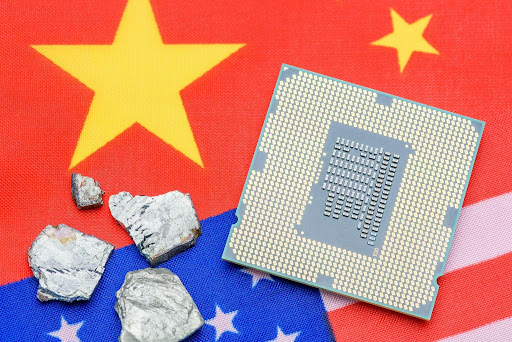 Last October, the Chinese government threatened to end exports of rare earths in a move that highlighted its economic leverage in this tariff tussle. Many industries and the U.S. military rely heavily on these minerals, and vulnerability to a supply chain disruption remains a looming possibility. Rare earth elements (REE) are a group of 17 chemically similar elements. They include 15 lanthanides, which are 15 chemical elements in the periodic table, from lanthanum (La) to lutetium (Lu), and are known for their similar properties, including high melting points and reactivity. REEs are crucial for modern technologies, including electronics and renewable energy. They are used in magnets, batteries and catalysts. Despite their name, some rare earth elements are relatively abundant in the Earth's crust. Despite the initial Chinese threat, the administration was able to cut a deal where the U.S. would not apply tariffs as high as 130% and would cut existing tariffs. In return, China agreed to hold off on restricting rare-earth exports for a year. The need to develop a stronger rare-earth industry outside of China has been made clear by the administration, which is ready to support more domestic and non-China sources. China mines 60% of the global supply and processes 80% of those materials, according to a 2025 report from the group Resources for the Future. The recently launched Sprott Rare Earths Ex-China ETF (NASDAQ: REXC) is a fund aiming to provide exposure to the rare earth materials industry while excluding companies located within China. It is focused on companies operating outside of the world's largest rare-earth market. This adds to a line of critical materials and precious metals exchange-traded funds (ETFs) the company already offers, with the nuance being that it avoids exposure to the world's largest source of rare earth elements, China, and focuses on non-Chinese companies that are stepping up to strengthen Western supply chains to help ensure supply for a wide range of applications from electrification to semiconductor manufacturing. Key Aspects Of REXC:
This ETF is focused on the rare earth sector, which is increasingly viewed as a key component of national security and green energy supply chains. REXC rebalances quarterly. The fund invests in the largest and most liquid companies that generate at least 50% of their revenues from the rare earth and strategic metals segment. REXC has significant exposure to small- and micro-caps and emerging-market issuers, which are the firms you typically find producing cerium. Looking Ahead "(W)hat happens when an industry is critical to our national interest, yet the market determines it is more efficient for China to dominate it? The best example of this is rare-earth minerals," Marco Rubio said in a National Defense University speech at the end of 2019. "For decades, we enjoyed a broad consensus that, once China became rich, they would become more like us - more democratic and respectful of the rules that govern international trade and commerce." Herein lies the wild card risk for rare-earth investors. Would China use its leverage in the rare-earth industry to influence geopolitical policy? That certainly seems plausible, and developing non-China sources for these critical materials will likely continue to be a key consideration moving forward. For retail investors, the rare-earth space presents unique opportunities that can offer diversification and hedging. A fund like REXC offers access to that with one investment fund and is readily available at online brokerages. Featured image from Shutterstock. This content was originally published on Benzinga. Read further disclosures here. This post contains sponsored content and was created in collaboration with a third-party partner. Benzinga is a publisher and does not provide personalized investment advice or act as a broker or dealer. This content is for informational purposes only and is not intended to be investing advice or an offer or solicitation to buy or sell any security. IMPORTANT DISCLOSURES & DEFINITIONS An investor should consider the investment objectives, risks, charges and expenses carefully before investing. To obtain a Sprott Rare Earths Ex-China ETF Statutory Prospectus, which contains this and other information, visit https://sprottetfs.com/rexc/prospectus, contact your financial professional or call 1.888.622.1813. Read the Prospectus carefully before investing. Diversification does not protect against loss. The Sprott Rare Earths Ex-China ETF is new and has limited operating history. Investors in the Fund should be willing to accept a high degree of volatility in the price of the Fund's shares and the possibility of significant losses. An investment in the Fund involves a substantial degree of risk. The Fund is not suitable for all investors. The Fund is considered non-diversified and can invest a greater portion of assets in securities of individual issuers than a diversified fund. As a result, changes in the market value of a single investment could cause greater fluctuations in share price than would occur in a diversified fund. Compared to base metals, rare earths have more specialized uses, crucial to many of the world's most advanced technologies. Consequently, the demand for rare earths has strained supply, which may result in a shortage, adversely affecting the companies in the Fund. Shares are not individually redeemable. Investors buy and sell shares of the Sprott Rare Earths Ex-China ETF on a secondary market. Only authorized participants may trade directly with the Fund, typically in blocks of 10,000 shares. Nasdaq, Nasdaq Rare Earths Ex-China Index, and NSREXC are registered trademarks of Nasdaq, Inc. (which with its affiliates is referred to as the "Corporations") and are licensed for use by Sprott Asset Management LP. The Product(s) have not been passed on by the Corporations as to their legality or suitability. The Product(s) are not issued, endorsed, sold, or promoted by the Corporations. THE CORPORATIONS MAKE NO WARRANTIES AND BEAR NO LIABILITY WITH RESPECT TO THE PRODUCT(S). Sprott Asset Management USA, Inc. is the Investment Adviser to the Sprott Rare Earths Ex-China ETF. ALPS Distributors, Inc. is the Distributor for the Sprott ETFs and is a registered broker-dealer and FINRA Member. ALPS Distributors, Inc. is not affiliated with Sprott Asset Management USA, Inc. View the original release on www.newmediawire.com News Source: Benzinga 22.04.2026 CET/CEST Dissemination of a Corporate News, transmitted by EQS News - a service of EQS Group. |
| Language: | English |
| Company: | Benzinga |
| United States | |
| EQS News ID: | 2313434 |
| End of News | EQS News Service |
2313434 22.04.2026 CET/CEST