
Matthew C. Zorn previously argued that federal regulators determine "accepted medical use" through the FDA approval framework. Today, he appears on behalf of the United States defending a CMS program that introduces cannabinoid furnishing into Medicare connected clinical environments without FDA validation. The contradiction raises serious policy questions: if FDA approval defines medical legitimacy under federal law, how can Medicare linked access pathways expand before that standard is met? Programs like BEI risk signaling that clinical evidence is optional - a message that directly undermines companies investing years in FDA authorized cannabinoid drug development.
WASHINGTON, D.C. / ACCESS Newswire / May 3, 2026 / A major federal lawsuit now pending in the U.S. District Court for the District of Columbia is raising urgent questions about whether cannabinoid products can enter Medicare connected healthcare environments before they are proven safe and effective through the federal drug approval process.
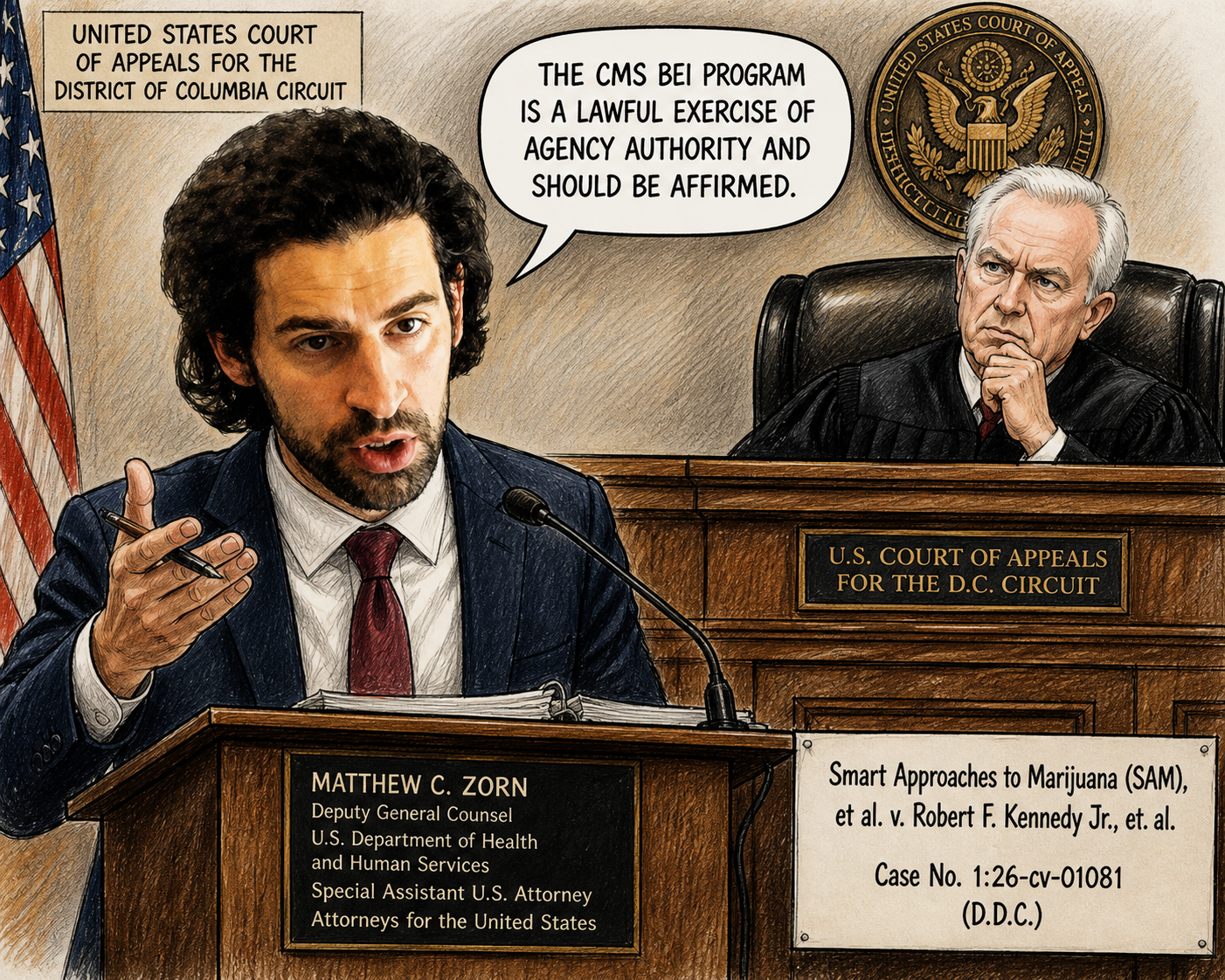
At the center of the dispute is:
Smart Approaches to Marijuana (SAM), et al. v. Robert F. Kennedy Jr., et al.
Case No. 1:26-cv-01081 (D.D.C.)
The case challenges the legality of the Centers for Medicare & Medicaid Services' Beneficiary Engagement Incentive (BEI) model - an Innovation Center program allowing provider-mediated furnishing of certain hemp-derived cannabinoid products to Medicare beneficiaries without approval from the U.S. Food and Drug Administration.
Critics say the policy represents something unprecedented:
Medicare infrastructure moving ahead of medicine.
A Structural Break From the Federal Drug Approval Sequence
For decades, federal healthcare policy followed a consistent rule:
science - clinical trials - FDA approval - coverage integration
The BEI model reverses that order:
distribution - furnishing - infrastructure exposure - evidence later
That shift is not procedural housekeeping.
It is a policy pivot.
The Lawsuit That Could Define the Boundary Between CMS and FDA Authority
The plaintiffs in SAM et al. v. Kennedy argue the Centers for Medicare & Medicaid Services exceeded its authority by introducing cannabinoid furnishing pathways into federally funded care environments without traditional safeguards such as:
• Federal Register rulemaking
• notice-and-comment procedures
• FDA drug approval
• interstate therapeutic compliance standards
Historically, the role of the Centers for Medicare & Medicaid Services has been to administer coverage - not determine what qualifies as medicine.
That responsibility belongs to the FDA.
Matthew C. Zorn Now Appears on Behalf of the United States
Federal filings identify:
Matthew C. Zorn
Deputy General Counsel
U.S. Department of Health and Human Services
Special Assistant U.S. Attorney
as appearing in the litigation for the United States government.
The development is drawing attention because Zorn previously argued publicly that federal regulators determine "accepted medical use" through the FDA approval framework.
Now he appears defending a policy structure critics say allows cannabinoid products to enter Medicare-connected clinical environments without satisfying that same standard.
Observers across the pharmaceutical cannabinoid sector are asking:
Has federal policy quietly shifted from evidence-first medicine to infrastructure-first access?
Why Clinical-Stage Cannabinoid Developers Are Alarmed
Companies pursuing cannabinoid therapies through FDA pathways invest years completing:
• Investigational New Drug authorizations
• chemistry, manufacturing, and controls validation
• stability testing programs
• toxicology and safety datasets
• controlled-substance compliance obligations
• orphan-designation development strategies
Programs like BEI risk creating a powerful new signal:
clinical trials are optional
That message could reshape the economics of cannabinoid drug development nationwide.
The Quiet Creation of a Parallel Therapeutic Channel
The CMS Innovation Center has broad authority to test payment and delivery models.
It was never designed to function as a substitute therapeutic approval pathway.
Yet the BEI structure introduces cannabinoid furnishing into Medicare-connected care environments without FDA validation.
Policy analysts warn this risks creating:
a shadow cannabinoid healthcare system operating outside the evidence-based drug framework
Why the Timing Makes the Case Especially Important
The lawsuit arrives at a turning point in federal cannabinoid regulation:
• cannabis scheduling reform remains under active federal review
• DEA research-licensing bottlenecks are under scrutiny
• botanical drug-development pathways are expanding
• orphan-designation cannabinoid therapies remain active
• Medicare cannabinoid coverage policy remains unsettled
Introducing reimbursement-adjacent cannabinoid furnishing into this environment without FDA approval risks destabilizing the clinical-evidence pipeline supporting pharmaceutical cannabinoid innovation.
The Incentive Problem No One in Washington Is Addressing
Federal drug development depends on a predictable rule:
evidence comes before reimbursement
If reimbursement infrastructure begins appearing first, the incentive to conduct expensive clinical trials weakens dramatically.
That affects:
patient safety
manufacturing consistency
dose reliability
interstate labeling integrity
long-term pharmacovigilance systems
In short:
it changes how medicine enters the healthcare system.
The Legal Question Now Before the Court
The outcome of:
Smart Approaches to Marijuana (SAM), et al. v. Robert F. Kennedy Jr., et al.
Case No. 1:26-cv-01081 (D.D.C.)
may determine whether the CMS Innovation Center can function as a parallel entry pathway for cannabinoid therapeutics outside the FDA approval structure.
That decision will shape more than cannabinoid policy.
It will define whether Medicare infrastructure can move ahead of medicine itself.
The Central Question Facing Federal Regulators
Matthew C. Zorn once helped challenge federal barriers limiting cannabis research.
Today, as Deputy General Counsel at HHS and Special Assistant U.S. Attorney, he appears on behalf of the United States defending federal authority to implement a cannabinoid furnishing model critics say bypasses the clinical-evidence pathway.
The question now confronting policymakers is straightforward:
Will cannabinoid therapies enter Medicare because they have been proven safe and effective through science-
or because someone found a way around the rules?
Madison Hisey
MHisey@mmjih.com
203-231-85832
SOURCE: MMJ International Holdings
View the original press release on ACCESS Newswire:
https://www.accessnewswire.com/newsroom/en/healthcare-and-pharmaceutical/cms-exposed-the-%22workaround-doctrine%22-how-matt-zorns-legal-cms-hemp-s-1163371
