By Cat Burns from The Nature Conservancy and Ari Swiller from RRG Capital Management
NORTHAMPTON, MA / ACCESS Newswire / May 7, 2026 / What's happening across the world's premium food-producing regions isn't a gradual shift that investors and asset managers can afford to ignore. It's an accelerating agri-food transition that is rewriting the sector's fundamentals, from land quality to water security to market stability. Across geographies, converging signals highlight the need for an immediate shift toward agricultural markets aligned with thriving natural systems. This transition creates both urgent needs and exciting opportunities for private capital participation.
It is increasingly understood that biodiversity loss is a systemic economic risk that is already disrupting supply chains and financial stability in the food system. More than half of global GDP rests on ecosystem services now in decline. News coverage from 2023-2025 highlighted volatile climate events that contributed to more than 140 instances of crop destruction worldwide. In response, governments are making historic commitments to mobilize capital to reverse biodiversity loss.
This agri-food transition is not theoretical for those of us working inside it. Through the RRG Sustainable Water Impact Fund (SWIF, the Fund), a $1B diversified, non-concessionary real assets platform, we see daily how these realities are reshaping both agricultural and ecological systems and the capital flows that depend on them.
Launched in 2019, SWIF is a collaboration between RRG Capital Management (RRG) and The Nature Conservancy (TNC), spearheaded at TNC by its impact investing team, NatureVest. SWIF aims to demonstrate how private capital can be successfully deployed to better manage land and water for people and nature.
SWIF uses a diversified strategy to create multi-layered value and measurable impact in premium agricultural regions by investing in business plans that aim to transition land and water assets from increasingly non-viable practices toward more resilient, water-secure, climate-adaptive uses.
Read the full article to learn more about the realities reshaping high-value crop regions, and what designing and managing a fund for the Agri-food Transition looks like in practice.
This article was originally published by GreenMoney in their May 2026 issue on 'Investing in Regenerative Ag and Food"
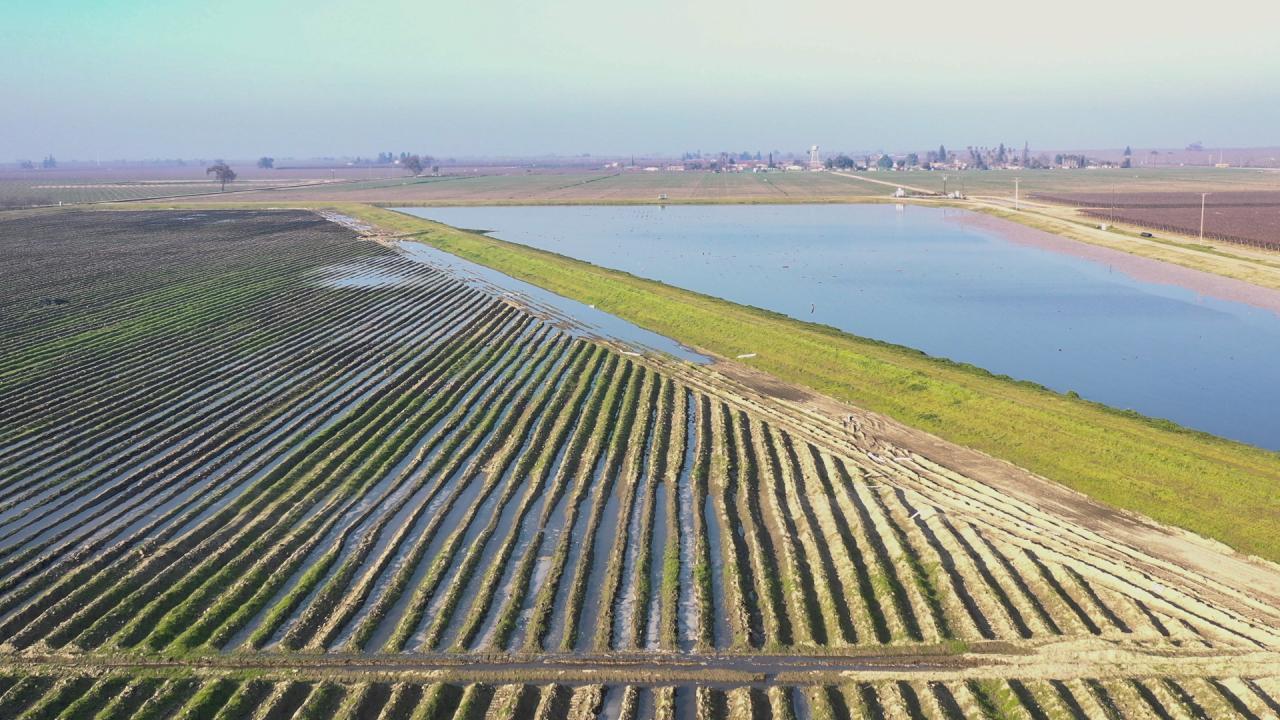
Capinero Creek recharge area. At this groundwater banking facility in California's Central Valley, dedicated recharge areas allow water to percolate down into the aquifer - an on-farm investment that boosts long-term water security. © Justin Darnell / RRG Capital Management LLC
Find more stories and multimedia from NatureVest at 3blmedia.com.
Contact Info:
Spokesperson: NatureVest
Website: https://www.3blmedia.com/profiles/naturevest
Email: info@3blmedia.com
SOURCE: NatureVest
View the original press release on ACCESS Newswire:
https://www.accessnewswire.com/newsroom/en/business-and-professional-services/investing-in-the-agri-food-transition-climate-aligned-water-resi-1164801