
NORTHAMPTON, MA / ACCESS Newswire / May 18, 2026 / by Susan Illman
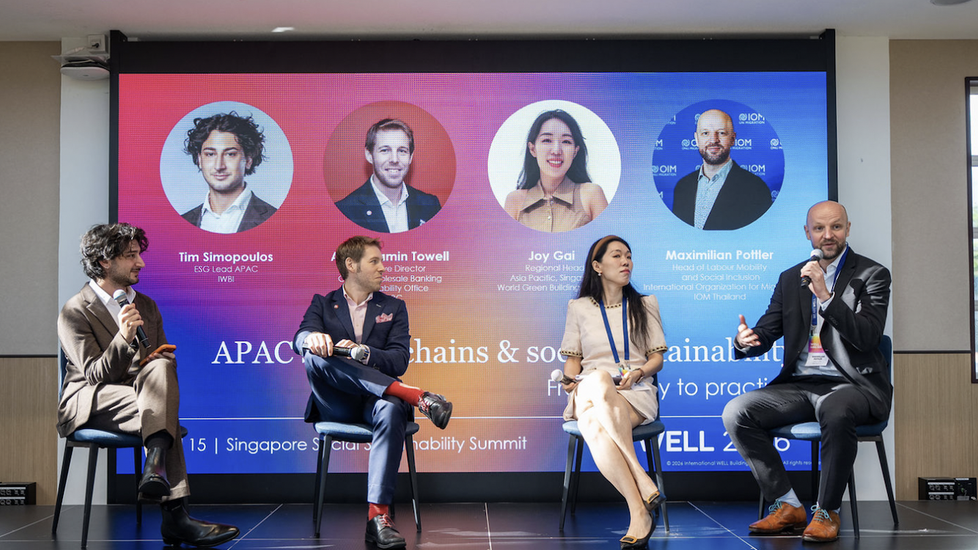
At IWBI's Social Sustainability Summit in Singapore, our APAC ESG Lead, Tim Simopoulos, hosted a panel about regulatory changes, investor expectations and global norms that are reshaping social sustainability in regional supply chains. Maximillian Pottler, Head of Labour Mobility and Social Inclusion at IOM Thailand | International Organization for Migration (IOM); Ar. Benjamin Towell, Executive Director, Global Wholesale Banking Sustainability Office, OCBC; and Joy Gai, Regional Head, Asia Pacific, Singapore, World Green Building Council, joined the panel. Highlights are captured below:
What does true social sustainability look like in a supply chain? Think of Nepal in 2015, when it was hit by a 7.8 magnitude earthquake killing nearly 9,000 people, injuring over 21,000 and causing massive destruction. At any given time, about one-quarter of Nepalis - or 2.5 million people - are working abroad and sending money home to support their families' education and access to food and health care. At the time of this natural disaster, Maximillian Pottler's organization, IOM worked with IKEA to map out IKEA's supply chain in Malaysia, which entailed tracing back the journeys of workers to their communities of origin.
Many of the workers were from Nepal, and faced a difficult decision: continue working and request more overtime so they can send more money back home to their families at home? Or request release with the option of returning after they'd gone home to rebuild their home? One of the employers participating in the project had the sense to extend compassion and choice to their workers so that they could make the best decision for their families and exercise maximum agency and resilience during a crisis. Some workers stayed while others returned home to rebuild, returning a few months later to resume work. Everyone benefited. In this way, business is positioned to thrive while its workers are supported so they could best weather life's unexpected disasters.
The Key Word to Unlocking Successful Social Sustainability
This is what social sustainability in the supply chain should look like - if the full supply chain of workers is valued by a business. But it's often not.
Basic human rights are frequently overlooked for a host of reasons - the task is too complex to practice well, too global to regulate, too onerous to operate. This panel addressed regulation and inadequate capacity to enforce rules, enormous data inputs for accurately tracing supply chains, technical solutions and financial support for making social sustainability in supply chains a reality across larger swaths of industry. But the common denominator panelists found to be most significant to social sustainability's success was a company's mindset on the topic.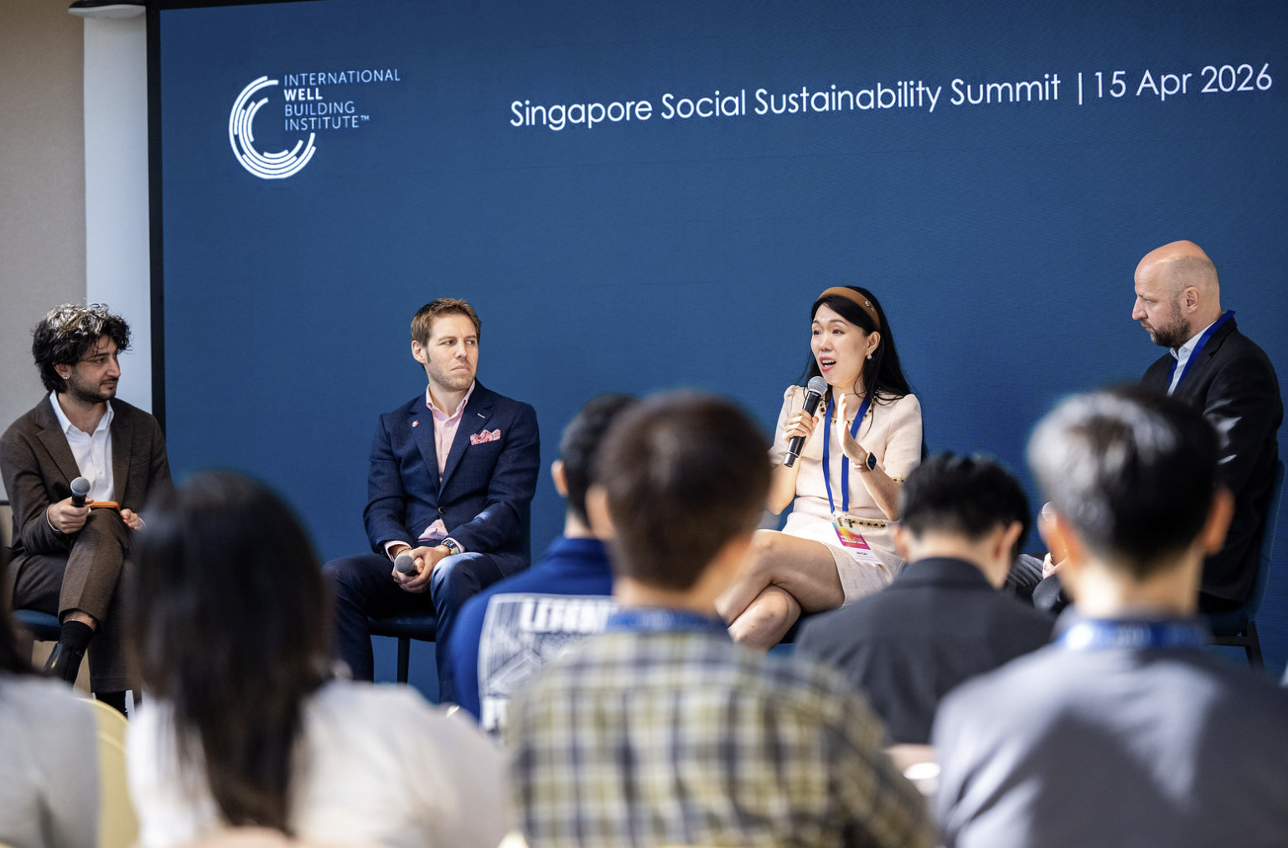
Tracing supply chains so that companies can ensure equity throughout is complex and difficult work. The rules of the road are detailed and many. The amount of labor to see it through can feel tremendous. But if preventing forced labor, child labor, and ensuring favorable environmental conditions in a workplace are things a company highly values, then the work is more than doable.
"If you believe in certain ways, you will make a right decision. If your perspective allows you to see a certain angle, then you will see where the problem is and what the possible solution can be. If your values hold human rights in high regard, you will fight for adjustments and bring this into policy," said Joy Gai, Regional Head, Asia Pacific, Singapore, World Green Building Council.
While no business in its right mind sets out to cause harm, many wind up doing so by not caring sufficiently for workers. Instead of focusing on the number of green ticks to check in the making of a building or a product, companies need to think about "the number of deaths that its building or product is contributing to. That framing would really help companies to make the right decisions quite quickly," said Ar. Benjamin Towell, Executive Director, Global Wholesale Banking Sustainability Office, OCBC.
Executive leadership and their human resources personnel possessing basic respect and compassion for other people can go a long way to overcoming obstacles in creating the human resources procedures for properly recruiting migrant workers, and company best practice guidelines for both environmental and human right policies, along with steps for how businesses can implement them effectively.
A company needs to have modern slavery defined and spelled out for them in a language they can understand, it's not an anti-business compliance requirement, "This allows a business to really process what they should be doing, with the guidance to do it meaningfully," said Mr. Towell. "This allows a business to really process what they should be doing, with the guidance to do it."
Where Companies Need to Focus to Improve
There's much work to be done by companies of all sizes in order to improve on social sustainability in supply chains. Often, companies place less value on workers further down the supply chain. "That segregation of labor needs to change," said Mr. Towell. All people on a supply chain add value to the end-product, thus all people are owed care and safety at work
"We need to become smarter," added Mr. Pottler. "Think longer term about our policies bringing in a migrant worker to do a particular job for a certain amount of time, then sending them back to their country of origin. They've acquired skills and knowledge on the job that are an asset to the employer. There must be greater interest in sustainable development."
As for resilience after human-made or natural disasters? Those have "the biggest negative impact on workers and business both in the shortest period of time," said Ms. Gai. However, this is often the last potential risk companies consider in terms of how they'll respond, she noted. "In order for businesses to become more aware and know how to deal with extreme situations, companies need to step up, hold a mindset of connection between individual workers and business success, and be responsible for how they take care of their employees."
View original content here.
Resources from IWBI
A Pathway for Change: Collaboration, Clarity and Action
Resources from the International Organization for Migration (IOM)
Migrant Worker Guidelines for Employers
Handbook for Businesses on Remediation of Migrant Worker Grievances
Migration, Business and Human Rights Programme in Asia
Find more stories and multimedia from International WELL Building Institute (IWBI) at 3blmedia.com.
Contact Info:
Spokesperson: International WELL Building Institute (IWBI)
Website: https://www.3blmedia.com/profiles/international-well-building-institute
Email: info@3blmedia.com
SOURCE: International WELL Building Institute (IWBI)
View the original press release on ACCESS Newswire:
https://www.accessnewswire.com/newsroom/en/business-and-professional-services/social-sustainability-the-key-ingredient-to-making-human-rights-1167729
