"As SAM (Smart Approaches To Marijuana) and MMJ International Holdings Prepare an Appeal, Medicare Doctors Now Stand Between Seniors and Uncharacterized, Unsafe Hemp Products," stated Duane Boise, CEO MMJ International Holdings.
WASHINGTON, D.C. / ACCESS Newswire / May 28, 2026 / Judge Trevor McFadden dismissed the challenge to CMS's Substance Access Beneficiary Engagement Incentive (BEI) program on standing grounds, ruling that no plaintiff had demonstrated a sufficiently concrete injury.
But in doing so, the court may have unintentionally revealed something far more important:
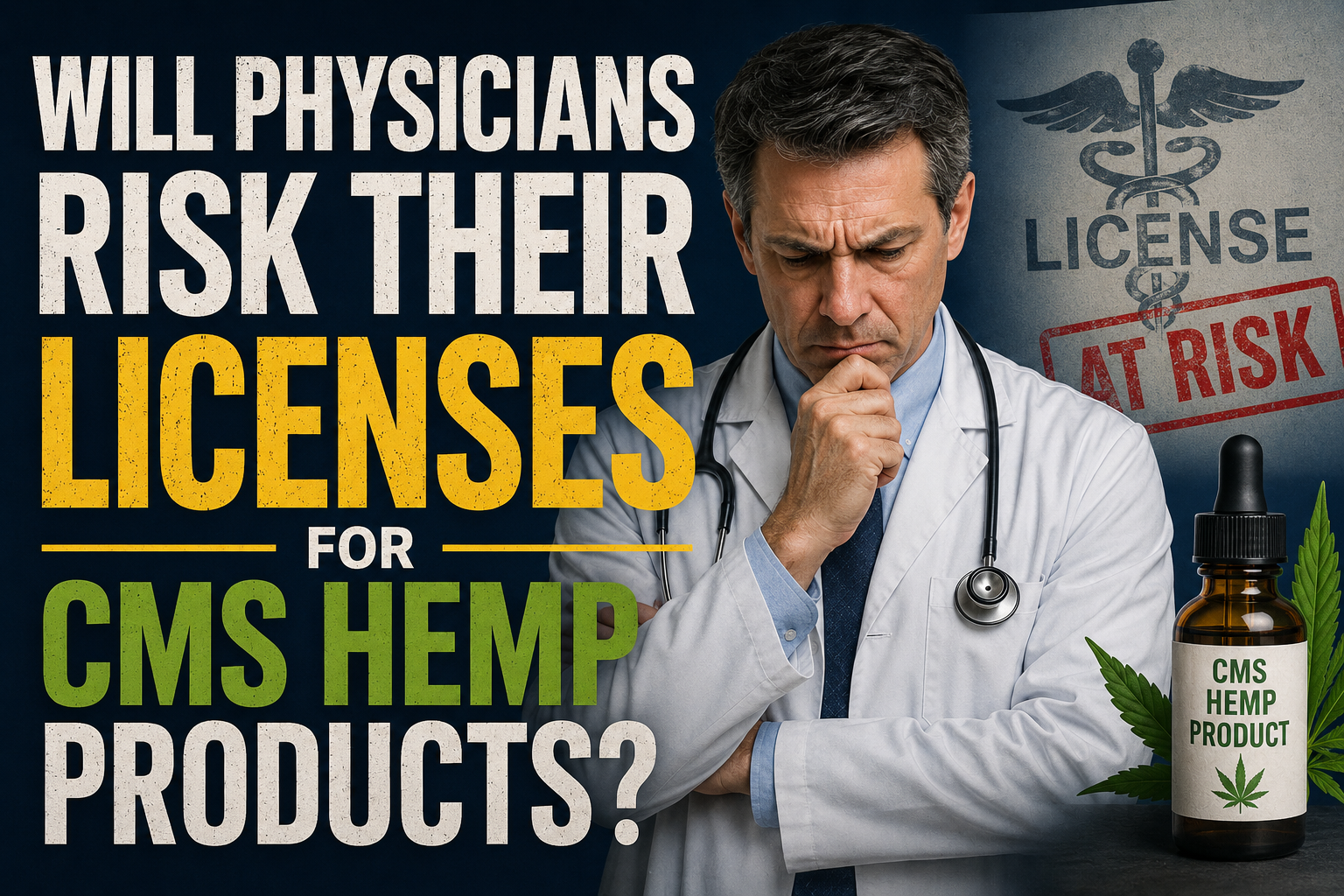
If the judiciary will not intervene yet, and CMS has chosen to move forward without FDA approval standards, then the burden of protecting Medicare patients now falls directly on physicians.
That is the new reality created by the BEI program.
The BEI does not technically force doctors to recommend hemp-derived cannabinoid products. Instead, it creates a federally supported reimbursement pathway allowing Medicare providers to furnish up to $500 annually in qualifying hemp products to beneficiaries.
That means physicians - not FDA reviewers, not CMS regulators, not federal courts - now become the final gatekeepers responsible for deciding whether elderly Medicare patients should receive products that often lack the evidentiary standards required of approved medicines.
And many physicians are unlikely to take that risk.
The EFSA Problem CMS Cannot Ignore
The issue is not whether cannabinoids may hold medical potential. Even MMJ International Holdings has spent nearly a decade pursuing cannabinoid therapeutics through FDA Investigational New Drug applications, Orphan Drug Designation, pharmaceutical manufacturing controls, and DEA registrations.
The issue is product characterization, reproducibility, stability, and physician liability.
That concern exploded into public view when the European Food Safety Authority evaluated a widely recognized hemp-derived product associated with Charlotte's Web and found substantial portions of the formulation could not be adequately characterized or validated under European scientific standards.
For physicians, that finding changes the equation entirely.
A responsible doctor treating elderly Medicare patients - many already taking multiple medications with compromised hepatic or renal function - must now ask:
What exactly is in the product?
Is the chemistry reproducible?
Are impurities fully identified?
Has long-term stability been demonstrated?
Are drug-drug interactions adequately characterized?
What happens if a patient suffers an adverse event?
Those are not political questions. They are standard medical questions.
And they are the same questions FDA approval is designed to answer before products reach vulnerable patients.
The Liability Issue No One Wants to Discuss
The most overlooked consequence of the BEI program may be physician exposure.
When a physician recommends a BEI-covered hemp product to a Medicare patient and something goes wrong, the practical liability may not fall on CMS or the manufacturer first.
It falls on the doctor whose name is attached to the recommendation.
FDA approval exists partly because physicians need an evidentiary framework supporting prescribing decisions. Without that framework, doctors are effectively being asked to exercise clinical judgment on products that may not meet the scientific standards expected of traditional pharmaceuticals.
That creates an extraordinary position for healthcare providers:
the federal government is encouraging access to products that have not undergone the same approval pathway physicians rely upon to protect themselves and their patients.
The Court Said No One Has Been Harmed Yet
Judge McFadden repeatedly emphasized the speculative nature of future injuries in dismissing the case for lack of standing.
But that reasoning may ultimately strengthen the medical community's role moving forward.
Physicians can now argue:
"The reason no one has been harmed yet is because doctors are refusing to recommend products they cannot adequately evaluate."
That is not anti-marijuana. That is medicine.
MMJ's Position Is Fundamentally Different
Unlike many companies operating in cannabinoid markets, MMJ International Holdings and its subsidiaries pursued the full federal pharmaceutical pathway:
FDA IND submissions,
DEA registrations,
analytical laboratory controls,
pharmaceutical-grade formulation development,
and Orphan Drug Designation for Huntington's disease.
MMJ is not arguing cannabinoids lack medical potential.
MMJ is arguing that if cannabinoids truly are medicine, then they deserve the same scientific rigor required of every other medicine entering the U.S. healthcare system.
That distinction matters.
Appeal Ahead
SAM (Smart Approaches To Marijuana) and MMJ International Holdings are expected to evaluate appeal options before the United States Court of Appeals for the District of Columbia Circuit following the district court dismissal.
The appeal will likely center on:
organizational standing,
competitive standing,
procedural standing,
and whether federally compliant pharmaceutical developers can be excluded from judicial review while federal programs expand access to non-FDA-approved cannabinoid products.
Until then, however, the frontline has shifted.
The judiciary stepped back. CMS moved forward.
Now physicians are left holding the responsibility FDA was originally designed to shoulder.
CONTACT:
Madison Hisey
MHisey@mmjih.com
203-231-8583
SOURCE: MMJ International Holdings
View the original press release on ACCESS Newswire:
https://www.accessnewswire.com/newsroom/en/healthcare-and-pharmaceutical/will-physicians-risk-their-licenses-for-cms-hemp-products-the-fda-nev-1171337