Please contact media@actionagainsthunger.org for inquiries.
By Ahmed Issak Hussein, Communication and Advocacy Coordinator for Action Against Hunger Somalia.
NORTHAMPTON, MA / ACCESS Newswire / June 2, 2026 / It was four in the afternoon when Abshiro Abdullahi Bare's phone lit up with a mobile money notification. She had been sitting in her shelter wondering, as she did most days, what the family would eat.
She called her husband immediately. The money is here.
For four months, her family of nine had been eating once a day. Some days, there was nothing at all.
That $100 - the first of three monthly transfers from an emergency cash program - was the moment things began to change.
Before displacement, Abshiro and her husband Hassan Abdi had a functioning livelihood in Deeh village, Garasweyne district. They farmed 1.3 acres and kept 52 goats, enough to feed the family and generate income.
Then successive droughts hit. Water sources dried up. Crops failed. Disease killed livestock. To survive, the family sold animals cheaply until only 18 goats remained. In a final bid for stability, they packed what they had left and walked two days to a displacement camp in Yeed.
"We had land and animals," Abshiro said, "but the drought took everything from us until we had nothing left to survive on."
Camp leaders gave the family a small plot. Hassan built a shelter from locally available materials and found work hauling firewood by donkey cart, earning roughly $3 a day for nine people.
The income covered almost nothing.
"We don't have food stocks," Abshiro said. "The little money we received is used to buy what to eat for today. Sometimes we have to store cooked food for the small children to eat later."
Abshiro contributed where she could, collecting firewood at times, managing the shelter, caring for the children, while the pressure to provide weighed heavily on Hassan.
"I appreciate my husband for the good work he put in during this time," Abshiro said. "He kept going even when there was nothing."
One of the children was screened by Action Against Hunger nutrition teams and found with a mid-upper arm circumference (MUAC), a standard measure of acute malnutrition, of 10.9cm, below the 11cm threshold that triggers treatment. The child was referred immediately to the Action Against Hunger Yeed Outpatient Therapeutic Program for care.
In late February 2026, Action Against Hunger teams conducted household vulnerability assessments across Yeed settlement as part of the Somalia Cash Consortium, funded by EU Humanitarian Aid.
Abshiro's household met multiple vulnerability criteria: recent displacement, total loss of productive assets, nine dependents, severely reduced food intake, and income well below subsistence level. She was registered for emergency multipurpose cash assistance.
"When they told me I had been selected, I felt like someone had finally seen our suffering."
Each monthly transfer of $100 arrived directly to Abshiro's mobile phone. She and Hassan reviewed their most urgent needs together before she managed the spending, a joint process that reflected how the household had always operated, even under pressure.
The money went toward staple foods such as rice, flour, sugar, cooking oil, milk, and vegetables, as well as clean water, medicine, children's clothing, and fodder to keep the remaining goats alive. Over three months, the family's meals increased from one to three times a day.
The child enrolled in the Outpatient Therapeutic Program was discharged after treatment with a MUAC of 11.9cm, a full centimeter of recovery that nutritionists measure in weeks of consistent feeding and care.
Abshiro saved $30 from each monthly transfer ($90 in total), a discipline that speaks less to comfort than to hard-learned knowledge of how quickly things can collapse.
Abshiro's experience was not isolated. Across Yeed settlement, families receiving cash assistance were able to re-engage with local markets, stabilize food consumption, and begin making decisions beyond the immediate day.
Adan Mohamed, a village elder in the Yeed community, had watched the drought's impact accumulate across many households. He had also watched what followed the cash transfers.
"Before the assistance, families were struggling to find one meal," he said. "The cash gave people the ability to buy food, pay for water, and keep their animals alive. When a family can do those three things, they start to recover. We saw that happen here."
The rains have now returned to Garasweyne. Hassan has gone back to their land in Deeh to prepare the farm for cultivation, starting over, with fewer animals than before and no savings beyond what Abshiro set aside during the crisis.
"The remaining goats can reproduce now that the rains have come," Abshiro said. "That is where we start."
The family is rebuilding from a lower base than the one drought destroyed. But they are rebuilding.
The emergency cash did not restore what the drought took. It was never designed to. What it did was hold the family together long enough for conditions to shift - keeping the children fed, the goats alive, and the option of return open.
Somalia has faced compounding crises for decades. Drought, flooding, conflict, and displacement have combined to strip households of assets and resilience faster than they can be rebuilt. Millions of families like Abshiro's, formerly self-sufficient, are now navigating displacement on marginal income and sitting in a precarious middle ground between acute emergency and recovery.
Multipurpose cash assistance, delivered unconditionally and directly to recipients, is among the most effective and cost-efficient tools in humanitarian response. It works through local markets, respects the agency of recipients, and addresses multiple needs simultaneously. The evidence base, built over two decades of programming, is consistent.
The Somalia Cash Consortium, supported by EU Humanitarian Aid and implemented by Action Against Hunger alongside partner organizations, applies this approach at scale across displacement-affected communities in Somalia. In Yeed, it reached a family on the edge and gave them the stability to begin again.
"This cash support did not just save my family," Abshiro said. "It gave us life again when everything had been lost."
***
Action Against Hunger leads the global movement to end hunger. We innovate solutions, advocate for change, and reach 26.5 million people every year with proven hunger prevention and treatment programs. As a nonprofit that works across over 55 countries, our 8,500+ dedicated staff members partner with communities to address the root causes of hunger, including climate change, conflict, inequity, and emergencies. We strive to create a world free from hunger, for everyone, for good.
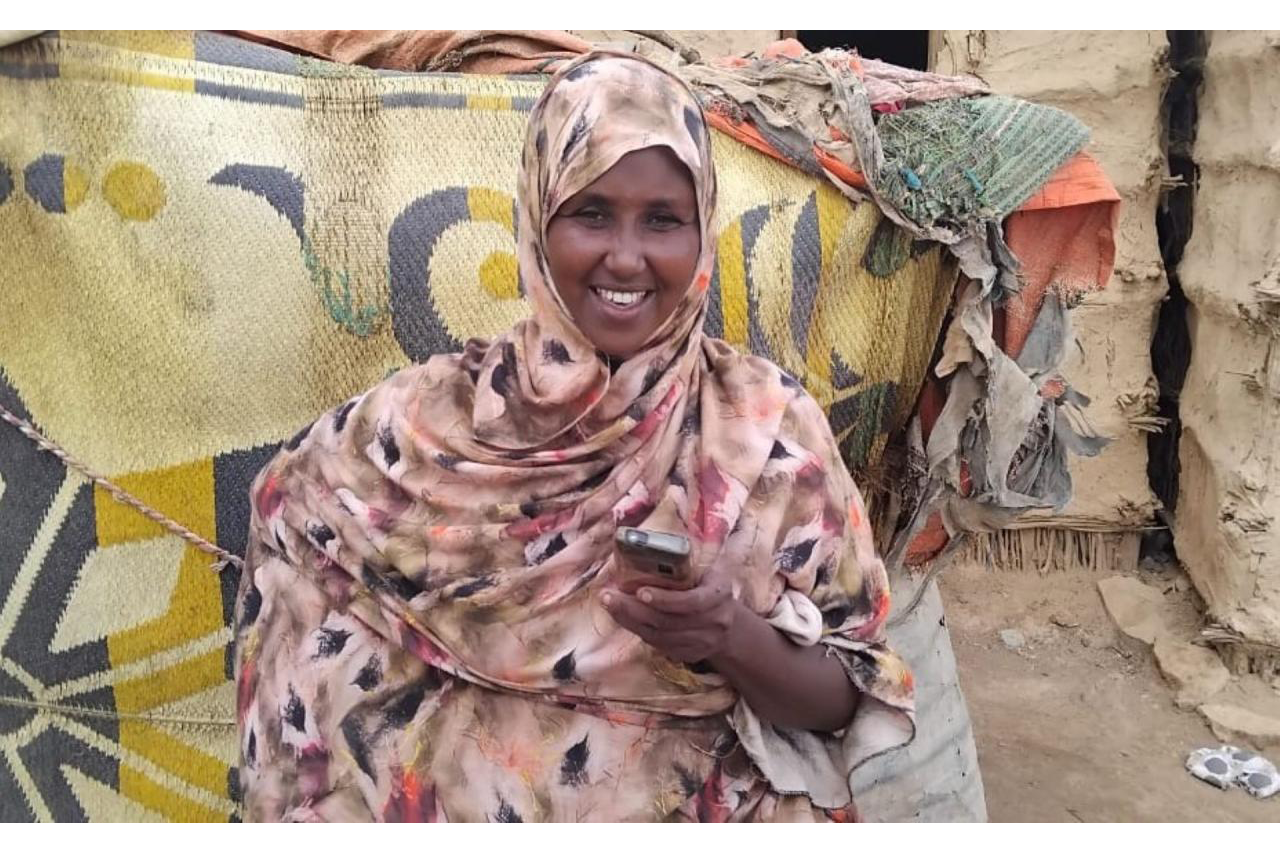
Abshiro receives a text from Action Against Hunger confirming a mobile cash transfer.
Find more stories and multimedia from Action Against Hunger at 3blmedia.com.
Contact Info:
Spokesperson: Action Against Hunger
Website: https://www.3blmedia.com/profiles/action-against-hunger
Email: info@3blmedia.com
SOURCE: Action Against Hunger
View the original press release on ACCESS Newswire:
https://www.accessnewswire.com/newsroom/en/business-and-professional-services/a-phone-notification-that-changed-everything-for-a-family-in-som-1172763