
Pioneering real-world test in one of Europe's largest wastewater treatment facilities puts into action one of the nine mitigation measures prioritized in Tire Industry Project's white paper for addressing tire and road wear particles
GENEVA, CH / ACCESS Newswire / June 16, 2026 / The Tire Industry Project (TIP) is conducting a pilot project with the Greater Paris Sanitation Authority (SIAAP) and sustainability consultancy ERM to test how effectively wastewater treatment plants (WWTP) can potentially remove tire and road wear particles (TRWP). This study will run through 2026 at SIAAP's Valenton wastewater treatment plant near Paris, France - the second largest in Europe and one of the most advanced facilities that is broadly representative of modern municipal wastewater treatment plants.
Why is this important?
In many cities around the world, rainwater and road runoff are treated by wastewater systems before being released back into waterways such as rivers. Understanding how effective wastewater treatment processes treat TRWP could inform more widespread implementation of best practices in wastewater management.
To date, there is limited evidence that systematically quantifies the removal of TRWP in WWTP. This project is expected to generate robust, end-to-end data, providing a holistic picture and filling a critical knowledge gap.
It is also TIP's first, real-world test of one of the nine priority TRWP mitigation measures identified in its white paper, Commitment to Addressing Tire and Road Wear Particles.
How does the pilot work?
Between now and the end of 2026, the pilot will aim to analyze samples collected at key treatment stages at the Valenton plant using advanced laboratory techniques, including pyrolysis gas chromatography-mass spectrometry (PY-GC/MS). It will then estimate how much TRWP is removed across the full treatment process. Results are expected to be submitted to a scientific journal for peer review, with final publication likely in early 2027.
From knowledge to action: Researching and assessing potential mitigation measures
TRWP remains an evolving and extremely complex field of study, given the lack of harmonization, the varying characteristics of TRWP and their transformational products as well as the diverse environmental compartments through which they move.
In addition to supporting standardization and setting limits for tire abrasion, TIP and its member companies have committed to advancing the scientific understanding of TRWP to enable science-based mitigation approaches. TIP has been conducting and supporting research to strengthen the knowledge base-specifically around TRWP quantification, characterization, environmental migration and potential impact-while engaging with stakeholders across the value chain to support evidence-based mitigation.
In 2024, TIP published a Commitment to Addressing Tire and Road Wear Particles, which evaluated more than 50 different mitigation measures found in scientific literature. It then prioritized nine of them based on their potential to reduce TRWP, both upstream and downstream, using a three-part approach: prevention, containment, and removal.
While prioritizing nine measures, the paper emphasizes that there is no one-size-fits-all or a single-actor solution. Achieving meaningful progress requires implementation of multiple measures at scale, through multifaceted actions across all actors involved in TRWP generation and management - including the tire, road construction and automotive industries, alongside municipal authorities, academia, and other public and private stakeholders.
At the same time, the review also showed that none of the mitigation measures analyzed have yet been proven to be effective, specifically regarding TRWP, and would require on-ground assessment.
In that regard, the Valenton pilot represents TIP's first initiative to test the real-world efficacy of wastewater management in removing TRWP, bringing together multiple stakeholders from the public and private sector.
"This pilot is an important step in going beyond understanding the subject in the laboratory to field-based evidence," said Larisa Kryachkova, Executive Director at TIP. "We expect to identify best practices that can be applied far beyond this project, supporting TIP's ambition to support science-based mitigation."
"As the public authority responsible for wastewater treatment in the Paris region, SIAAP is committed to emerging science that protects waterways," said Sabrina Guérin, Head of Innovation department, SIAAP. "By taking part in this TIP study, we will gain an early, science-based view of TRWP movement in solid waste. The findings can help inform and accompany future treatment planning and readiness for upcoming regulatory requirements."
Notes to Editors:
What is TRWP and why/ how is it produced?
Tires play a unique role in providing safe mobility, as they are the only connection between the vehicle and the road. The friction between tires and the road surface, which is critical to vehicle safety and performance, unintentionally causes abrasion and creates tire and road wear particles (TRWP). They are an approximately half-and-half mixture of tire tread and road pavement material.
TRWP generation is influenced by many factors impacting tire wear, including tire design, vehicle characteristics (such as weight, distribution of load, location of driving wheels and suspension types), road surface (material, runoff design, roughness), weather (humid or dry, hot or cold), road topology (hilly or flat, winding or straight), and driving behavior (aggressive or smooth driving, high or moderate speed, respecting the correct inflation pressure, braking).
About TIP
Formed in 2005, the Tire Industry Project (TIP) is a voluntary CEO-driven initiative with a mission to anticipate, understand, and address global environmental, social, and governance (ESG) issues relevant to the tire industry and its value chain.?
TIP acts by commissioning independent research of the highest standards, collaborating on sectoral solutions, and engaging with external stakeholders. ?
TIP is part of the World Business Council for Sustainable Development (WBCSD), bringing together 10 leading tire companies that represent more than 60% of the world's tire manufacturing capacity.
In 2025, TIP marked its 20th anniversary - a milestone that reflects its long-term commitment to advancing scientific knowledge and fostering collective industry action to improve sustainability across the tire value chain.
For more information, visit The Tire Industry Project.
About ERM
ERM is a leading global sustainability consultancy, specializing in environmental, health, safety, risk, and social consulting services. With over 8,000 professionals across 40+ countries, ERM helps organizations integrate sustainability into their strategies and operations. ERM has previously worked with TIP on field studies of TRWP in the environment. Their work has also included developing and refining analytical methods to detect TRWP.
About SIAAP
SIAAP (Syndicat Interdépartemental pour I'Assainissement de I'Agglomération Parisienne) is a French public utility managing 6 WWTPs, 481km of sewer lines, and 8 stormwater basins. It treats approximately 2.5 million m³/day of wastewater for more than 9 million people in Paris region. SIAAP has strong expertise in urban water-quality modeling and experience with major initiatives such as the Seine River restoration and circular-economy programs such as beneficial reuse of sludge and biogas production.
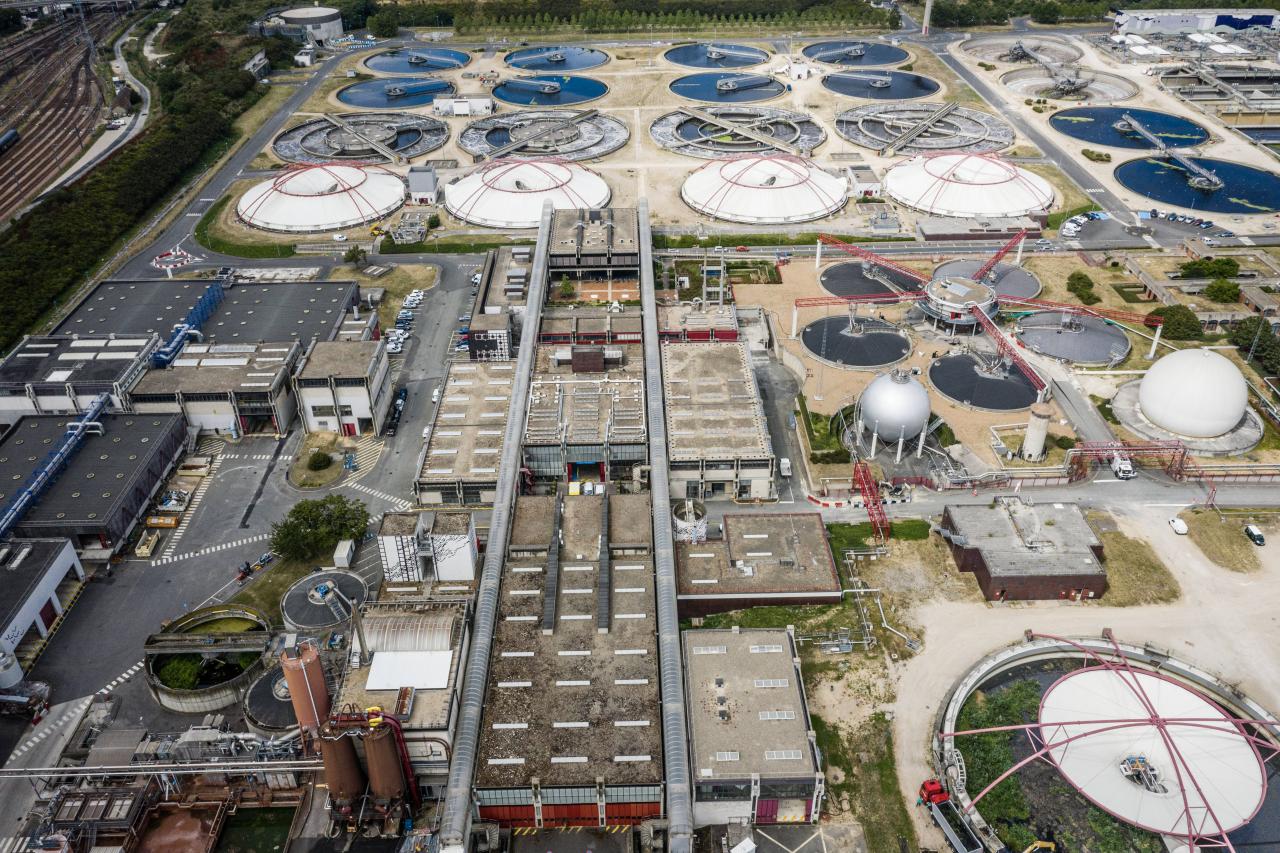
The Valenton wastewater treatment plant in Paris, France. Credit: O Rolfe - SIAAP
Find more stories and multimedia from Tire Industry Project at 3blmedia.com.
Contact Info:
Spokesperson: Tire Industry Project
Website: https://www.3blmedia.com/profiles/tire-industry-project
Email: info@3blmedia.com
SOURCE: Tire Industry Project
View the original press release on ACCESS Newswire:
https://www.accessnewswire.com/newsroom/en/business-and-professional-services/tire-industry-project-pilots-how-wastewater-treatment-can-potent-1178106
