
June 23, 2026 - As AI moves from experimentation into critical infrastructure, a new reality is emerging across Europe and Middle East
NORTHAMPTON, MA / ACCESS Newswire / June 30, 2026 / As AI moves from experimentation into critical infrastructure, a new reality is emerging across Europe and the Middle East: control over data, compute and energy is becoming as important as performance itself.
This shift is already well underway. 88% of IT decision-makers view data sovereignty as critical to competitiveness, and nearly all expect it to remain a priority over the next five years. As regulation tightens and the value of data continues to rise, organisations are rethinking not just how AI is built, but where it lives, who controls it, and how it is governed.
Regulatory pressure and geopolitical complexity are accelerating this transformation. Organisations are being challenged to scale innovation globally while maintaining local accountability, compliance and trust.
This is redefining infrastructure strategy. AI is no longer just a software challenge, it is an infrastructure decision. And increasingly, it is a sovereign one.
Delivering high-performance at scale
Lenovo has maintained long-term global leadership in in high-performance computing, with ThinkSystem technology currently powering 133 supercomputers on the latest TOP500 list[1]. Remaining at the forefront of this transformation, Lenovo powered HPC clusters are enabling organisations across industries and markets, to build and scale sovereign AI environments with high-performance, energy-efficient infrastructure designed to deliver control, performance and sustainability - without compromise.
At the same time, Lenovo continues to demonstrate leadership in sustainable computing, with strong representation in the Green500 rankings for energy-efficient supercomputing - including one of the top 5 listed.
A changing landscape: from experimentation to infrastructure
Market momentum underscores that this shift is structural, not incremental. According to Lenovo's CIO Playbook, 93% of organisations in Europe and the Middle East are increasing AI budgets, with infrastructure now the top investment priority. Meanwhile, 82% are planning on-premises or edge deployments, reflecting a clear preference for environments that offer greater control, compliance and performance.
Crucially, organisations now rank scalable, high-performing, and energy-efficient infrastructure as one of the most critical success factors for AI adoption. This is a clear indicator that AI has become fundamentally dependent on the underlying compute architecture.
Across the region, regulatory frameworks such as GDPR and the EU AI Act, combined with sovereign cloud mandates and national AI strategies, are accelerating this shift. At the same time, enterprises are prioritising the protection of intellectual property and sensitive data, driving a move toward more controlled and localised AI environments.
The result is a profound evolution in the role of HPC. GPU clusters are moving into sovereign data centres, governments are investing in national supercomputing, and enterprises are building private AI platforms - transforming HPC from research infrastructure into a foundation for competitiveness and digital independence.
Delivering real-world results
This transformation is already delivering tangible outcomes. At TechWorld earlier this year, Lenovo unveiled its AI Cloud Gigafactory program with NVIDIA, and Hybrid AI Factory Services, enabling organisations to deploy sovereign, secure and specialised AI environments at scale. Built on next-generation accelerated computing architectures, these solutions allow organisations to bring AI closer to their data - while maintaining full control over performance, cost and compliance. Across Europe and the Middle East, organisations are already translating this capability into real-world impact.
In Germany, Lenovo is powering next-generation sovereign AI research in the Free State of Bavaria at the HPC-center of University of Erlangen (NHR@FAU), enabling the development of large multi modal models under strict GDPR requirements. The system delivers secure, high-performance compute at national scale, which demonstrates how purpose-built HPC infrastructure can help Europe advance AI innovation while retaining full control over data and compliance.
In France, the University of Grenoble Alpes has inaugurated the CINAURA "Kraken" supercomputer enabling researchers to process complex datasets locally while strengthening national digital sovereignty. This allows faster, more secure AI-driven discovery across disciplines ranging from physics to advanced computing.
In Azerbaijan, AzInTelecom has launched the country's first Supercomputer Center, built on Lenovo infrastructure, to support its national AI strategy. By enabling AI workloads - from public services and language platforms to cybersecurity and research - to be developed and run in-country, the platform is helping to strengthen data sovereignty while accelerating innovation.
But these are not isolated examples, they are signals of a broader trend: AI infrastructure is being rebuilt around sovereignty, scale and control.
Energy efficiency: powering sustainable scale
As organisations scale AI, a new constraint is emerging; energy. AI workloads are inherently power-intensive and without efficient infrastructure design, scaling them becomes economically and environmentally unsustainable - particularly in Europe, where energy costs and regulatory scrutiny are intensifying.
This is driving a fundamental rethink of data centre design.
Technologies such as liquid cooling, higher rack density and intelligent workload management are no longer optional enhancements, they are essential to unlocking sustainable AI at scale. By enabling more efficient heat removal and higher compute density, these innovations allow organisations to maximise performance while reducing energy consumption and environmental impact.
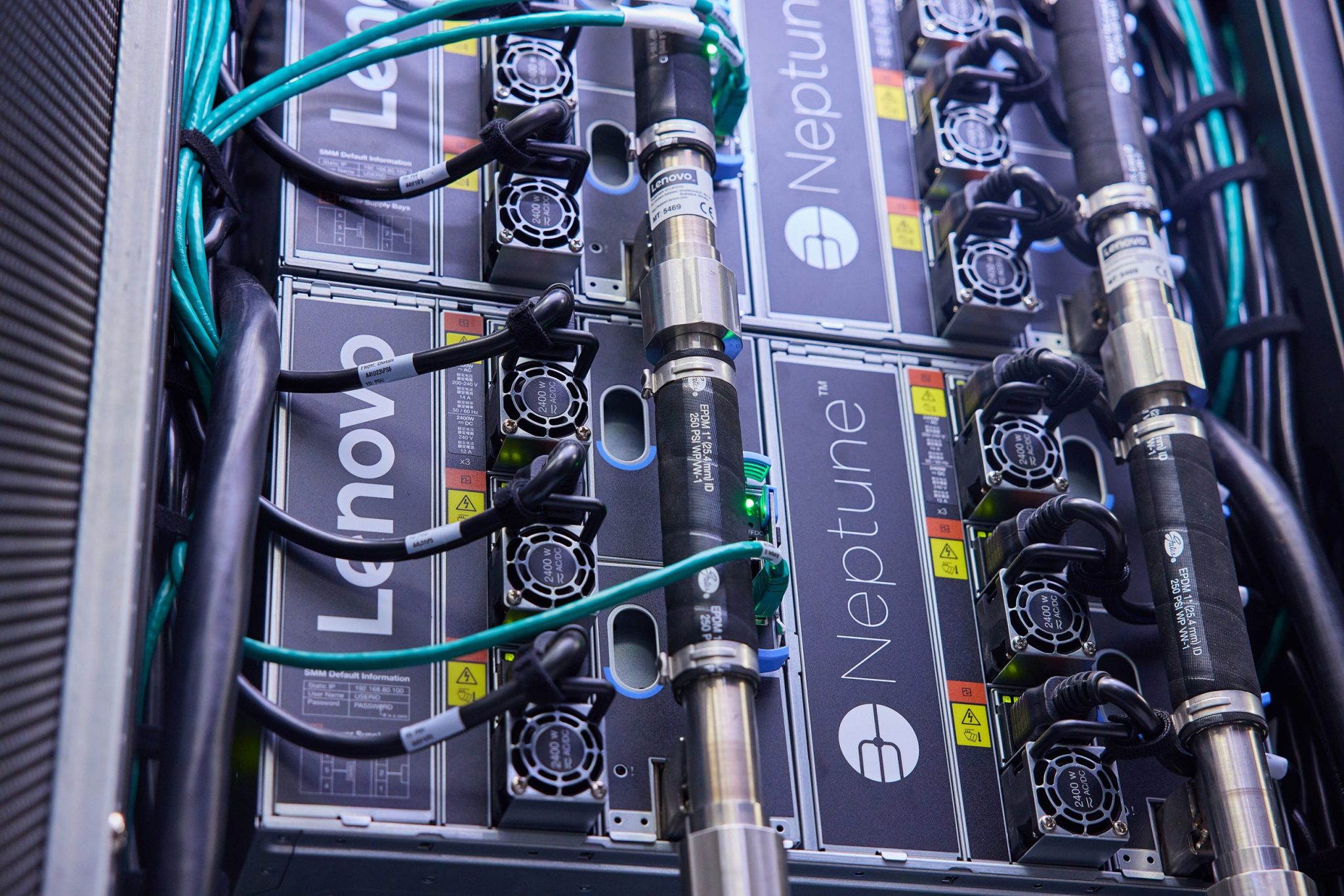
Lenovo is leading this shift through its Neptune liquid cooling technology, which can improve energy efficiency by up to 40% while enabling higher-performance HPC and AI workloads. Deployed in environments such as Formula 1's Media & Technology Centre, Neptune demonstrates how advanced cooling can simultaneously drive performance, efficiency and sustainability.
In this context, energy efficiency is no longer just an operational consideration, it is becoming a strategic differentiator.
Powering the future of sovereign AI strategies
The convergence of AI scale, regulatory pressure and energy constraints is creating a new reality for organisations across Europe and the Middle East. Sovereign AI is no longer a niche concept, it is becoming the default model for enterprise and national AI strategies.
In this new landscape, scalable and energy-efficient infrastructure is not optional. It is the foundation on which organisations can:
Protect and control their data
Comply with evolving regulations
Scale AI workloads with confidence
Build a long-term competitive advantage
By combining global HPC leadership with a full-stack AI portfolio spanning infrastructure, software and services, Lenovo is enabling organisations to move from experimentation to production - from AI ambition to real-world impact.
Visit booth D30 at the International Supercomputing Conference in Hamburg from June 22-26 to discover how Lenovo is powering the next era of sovereign AI.
[1] including Lenovo ThinkSystem installations by other vendors.
Find more stories and multimedia from Lenovo at 3blmedia.com.
Contact Info:
Spokesperson: Lenovo
Website: https://www.3blmedia.com/profiles/lenovo
Email: info@3blmedia.com
SOURCE: Lenovo
View the original press release on ACCESS Newswire:
https://www.accessnewswire.com/newsroom/en/industrial-and-manufacturing/the-rise-of-sovereign-ai-the-next-evolution-of-hpc-1184587