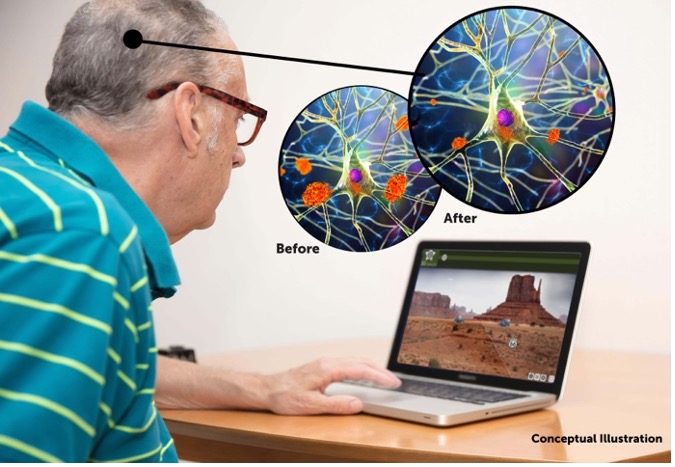
BrainHQ brain training used in ENACT Study
LONDON, July 13, 2026 (GLOBE NEWSWIRE) -- The same brain training shown in the past nine months to reduce the incidence of Alzheimer's in the ACTIVE Study and to rejuvenate the production of the brain chemical acetylcholine (known to plummet with Alzheimer's) in the INHANCE Study, has now been shown to improve beta amyloid biomarkers, a key indicator of Alzheimer's, in a study presented today at the Alzheimer's Association International Conference in London. The new results are to be published as an abstract in a supplement to Alzheimer's & Dementia, The Journal of the Alzheimer's Association. The brain exercises achieving these results (often referred to as "speed" or "speed of processing" training") are available exclusively as part of the brain fitness app, BrainHQ from Posit Science.
The newly announced results are from the ENACT (Elucidating the Necessary Active Components of Training) Study, a randomized controlled trial, which evaluated whether computerized cognitive training could alter blood-based biomarkers associated with dementia risk. Participants (n = 53) were randomized to 20 hours of training on either BrainHQ or computer games (such as Word Search). Analyses examined biomarker changes before and after training. The researchers reported a significant improvement in Aß42/Aß40 ratios following speed training, suggesting that this form of cognitive training may influence biological pathways involved in neurodegeneration. Biomarker changes varied by sex, consistent with a growing body of evidence that men and women respond differently to Alzheimer's-related therapies, such as amyloid-targeting drugs and cholinesterase inhibitors.
"The ENACT Study researchers have run what we believe to be the first study to examine the relationship between brain training and levels of beta amyloid," observed Dr. Henry Mahncke, a leader in neuroplasticity research and the CEO of Posit Science, which makes and markets the BrainHQ brain exercise app used in the ENACT Study.
"To many these results will be surprising," Dr. Mahncke continued, "but taken together with the ACTIVE and INHANCE studies published over the past nine months, they tell a very coherent and important story of a major evolution in our thinking about Alzheimer's, which shows the biological paths by which plasticity-based training can remodel the brain to slow and even reverse cognitive aging and offer some protection against dementia."
The NIH-funded, 2800-person, ACTIVE Study 20-year follow-up, published in February, earned headlines around the globe with its finding that speed training (exclusively available in BrainHQ) reduced diagnoses of Alzheimer's, as reported in Medicare records over 20 years, by 25% (with just 23 hours, in total, of training, spread over the first three years).
The NIH-funded INHANCE Study, published in November, also garnered global press, when researchers at McGill University used advanced neuroimaging in a randomized controlled trial to track whether 10 weeks of BrainHQ exercises had any impact on the production of acetylcholine (the "pay attention" brain chemical), known to downregulate at an accelerating rate with aging and to plummet with dementia. While acetylcholine has long been a target of Alzheimer's research, no intervention other than BrainHQ has been shown to upregulate its production in a manner that persists after the intervention. The McGill researchers reported that following 10 weeks of training, the upregulation was equivalent to about a 10-year "rejuvenation" in acetylcholine production.
Taken together with the new ENACT study results, these studies support a new path beyond targeting removing "plaques and tangles"- long the primary identifiers of Alzheimer's and for decades the primary focus of Alzheimer's research spending.
"Collectively, these studies show the right kind of brain training can upregulate acetylcholine production, improving the cholinergic system, and, through the cholinergic anti-inflammatory pathway, reducing Alzheimer's-related pathologies, like amyloid."
"I believe a synthesis of these three recent breakthrough studies should further shift resources to dementia prevention and especially to the role of harnessing neuroplasticity to reduce inflammation, to upregulate neuromodulation, and to improve biological resilience of the brain as an organ. We view neuroplasticity as a key contributor to what some call 'cognitive reserve' - the ability of the brain to resist dementia." Dr. Mahncke added.
BrainHQ exercises have shown benefits in more than 300 studies. Such benefits include gains in cognition (attention, speed, memory, decision-making), in quality of life (depressive symptoms, confidence and control, health-related quality of life) and in real-world activities (health outcomes, balance, driving, workplace activities). BrainHQ is used by leading health and Medicare Advantage plans, by leading medical centers, clinics, and communities, and by elite athletes, the military, and other organizations focused on peak performance. Consumers can try a BrainHQ exercise for free daily at brainhq.com.
A photo accompanying this announcement is available at https://www.globenewswire.com/NewsRoom/AttachmentNg/de5c0048-5865-4b8a-919e-951e3350a6f0

Contact: media@brainhq.com