
Company: Replenish Nutrients
Listings: CSE Canada, Frankfurt and US OTC
Tickers: ERTH / VVIVF / WIMN
Market cap at time of publication: $38 MCAD
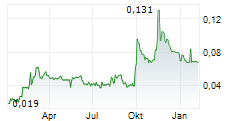
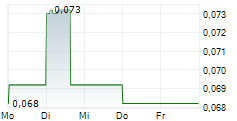
Stock price at time of publication: $0.19 CAD
Business: Regenerative agriculture
Website: https://replenishnutrients.com/
MALMÖ, Sweden, July 20th, 2026 /PRNewswire/ -- Today's news, at the platform level, means the expansion would more than double Replenish's disclosed annualized capacity, The transformational 150,000 tonnes SRC Agrominerals is funding are owned tonnes - and owned tonnes are worth roughly three times licensed tonnes. Replenish has not doubled anything. It has added a second engine alongside the one it spent 2026 building. Upon closing, SRC is expected to acquire an initial 19.9% non-diluted equity interest and two board seats, committed to supply Replenish for ten years, and priced its own upside at $0.225. The $15 million funds a 150,000 tonne facility that lifts owned capacity more than fivefold - while the capital-light licensing engine runs on unchanged.
The pricing of the terms has been misread in early commentary. The 50 million units are priced at $0.15 against a $0.165 close ahead of the announcement - a discount of roughly 9%. That is a discount, and we will not describe it as anything else. What is notable is how small it is. Strategic and control-adjacent investments in CSE-listed micro-caps are routinely struck 20-30% below market, frequently with full warrant coverage. SRC took half-warrant coverage at $0.225, and its $7.5 million debenture converts at the same $0.225 - roughly 36% above the pre-announcement price. In other words, the majority of SRC's potential position only becomes economic if the stock re-rates by more than a third, and the warrant acceleration trigger sits at $0.28, some 70% higher. This is not a structure built to extract value from a discounted entry. It is a structure built by a party that expects the shares to work.
The capacity step is the substance.
The release confirms a separate 150,000 metric tonne pelletizing facility at the existing Beiseker property, targeted for Q1 2028, explicitly owned and explicitly stated to have no impact on current granulation output. That is additive to the disclosed platform: 24,000 tonnes at owned Beiseker granulation, 12,000 tonnes at the owned Beiseker colony pellet line, 100,000 tonnes at licensed FUE in Minnesota, and 10,000 tonnes at licensed MJ Ag.
The headline arithmetic - 146,000 tonnes rising to roughly 296,000 - understates the effect, because it treats owned and licensed tonnes as equivalent. They are not, and this is the distinction we think most readers need in order to value the release properly.
Owned tonnes versus licensed tonnes, in plain terms.
On the Company's disclosed inputs, a tonne produced in a Replenish-owned facility sells for roughly CAD 550-650 at a 25-35% gross margin. A tonne produced by a licensing partner generates a royalty guided at USD 40-60 - roughly CAD 55-82 - but at what we estimate to be an 85-90% gross margin, because Replenish contributes technology, IP and quality control while the partner funds and operates the plant.
First column describes fully owned facilities.
Second column describes licensed facilities.
Revenue per tonne ~CAD 550-650 ~CAD 55-82
Gross Margin 25-35% (Company-guided) 85-90% (ESGFIRE estimate)
Gross profit per tonne ~CAD 138-228 ~CAD 47-74
Who funds the plant Replenish Partner
An owned tonne is therefore worth roughly three times a licensed tonne in gross profit - but requires Replenish to find the capital. A licensed tonne earns less but costs nothing to add. Neither model is superior; they solve different problems, and until today Replenish had scale in only one of them.
What that means for the platform:
Of the 146,000 tonnes disclosed today, just 36,000 are owned. The expansion adds 150,000 owned tonnes, taking owned capacity from roughly 36,000 to roughly 186,000 tonnes per year - a step of approximately 5.2x - and inverting the mix from roughly three-quarters licensed to roughly two-thirds owned.
Applying the Company's own disclosed economics at full run-rate: the 186,000 owned tonnes represent on the order of CAD 102-121 million in annual revenue and CAD 26-42 million in annual gross profit. The 110,000 licensed tonnes represent a further CAD 6-9 million in royalty revenue converting to roughly CAD 5-8 million in gross profit at little to no incremental capital. Combined, that is gross profit potential broadly in the CAD 31-50 million range against an equity currently capitalised at a fraction of it.
We would stress heavily what those figures are and are not. They assume full utilisation of an asset not scheduled for completion until Q1 2028, and full ramp at FUE. We do not model full utilisation in year one, and no investor should. But the point stands even after severe haircuts - a 50% fill on the new facility alone implies revenue several times the current market capitalisation.
Critically, the licensing engine is unaffected.
Nothing in this release retires the capital-light model. FUE retains an explicit option to expand into additional territories and future Replenish technologies. The Hutterite colony template - which we wrote about in June, and which sits against roughly 1.7 million acres of colony-managed farmland in Alberta alone on the Company's disclosure - remains replicable at minimal incremental capital. Investors should read this transaction as a second engine bolted on, not a strategic pivot away from the first.
The supply agreement is where the moat sits.
Replenish and SRC will enter a ten-year agreement for Spanish River Carbonatite, with Replenish committing to a minimum annual volume and a minimum carbonatite content across its products. Two consequences. First, a decade of secured input for a scaled facility - the largest single execution risk in any fertilizer build-out, closed before ground is broken. Second, SRC's product is OMRI and ProCert-listed for organic use, which opens a certified-organic channel to Replenish's product line that did not previously exist. The commitment runs both ways and is a genuine obligation, not a free option - but a supplier holding 19.9% of the equity and board representation is aligned in a way a conventional offtake counterparty is not.
The board additions are substantive.
Tim Close spent ten years as CEO of Ag Growth International, over which revenue grew fivefold and he oversaw deployment of more than $700 million across 19 transactions, building AGI from a regional grain-handling supplier into a global food-infrastructure business. That is precisely the operating and capital-allocation profile a company moving from 36,000 to 186,000 owned tonnes needs. Dr. David Morris adds construction and project-execution depth at the moment Replenish enters its first major build.
What we will be watching.
The release does not disclose the capital cost of the expansion, and the $15 million is earmarked for the facility plus working capital, inventory, debt repayment and general corporate purposes. Replenish has a credible track record of capital efficiency at Beiseker, but a 150,000-tonne line with associated storage, processing and load-out infrastructure is materially larger than anything the Company has built. Whether this financing fully funds it is the first question we would put to management. Dilution should also be stated plainly: 50 million units issued, 25 million warrants at $0.225, and a debenture convertible into a further 33.3 million shares - roughly 108 million shares of potential issuance against a pre-transaction base we estimate at approximately 201 million.
Our read.
Replenish proved the unit economics at small scale in Q1 2026 with a 29% gross margin, then proved they could be replicated without capital through licensing and colony partnerships. This release is the third act: a strategic partner funding the first genuinely industrial-scale owned asset, securing the critical mineral input for a decade, and pricing its own upside at $0.225 rather than at the entry level. The tonnes do not arrive until 2028 and the execution risk between here and there is real. But the licensing engine that carries the story until then is untouched - and the market is valuing an equity that a counterparty with board seats and a ten-year purchase obligation has just anchored a third above.
Capacity, pricing, margin, transaction and board-biography figures are Company-disclosed. Revenue, gross-profit, per-tonne, share-count, ownership-mix and utilisation figures are ESGFIRE estimates derived from those inputs, using an assumed USD/CAD rate of approximately 1.37. The pricing interpretation, the mix-shift and moat thesis, and the forward outlook reflect ESGFIRE's own view based on publicly disclosed information, not Company guidance.
This post is based upon reliable sources, namely regulated press releases from the company and investor presentations. Nevertheless, this post may contain interpretations, estimates, or opinions of the authors, or other non-factual information. If that is the case, this is continuously stated above. Furthermore, any projections, forecasts, or similar are explicitly stated as such. The author holds shares and/or other securities of this company and the relevant company may or may not have paid the author for this content.. Because of the above, ESGFIRE urges the readers to always analyze all materials critically in an objective manner, e.g., concerning the reliability of the relevant source and of what constitutes the authors' personal interpretations. The readers is hereby reminded that the post does, as set forth in the Post, contain interpretations, estimates, or opinions of the authors. This post was published by Filip Erhardt, at ESGFIRE on 20/7 2026. Investing in stocks is combined with certain risks and it is possible to lose your entire investment. Our posts are made for educational purposes only and are not to be interpreted as tips, financial advice or recommendations of any kind to either buy or sell any stocks.
Furthermore, this interview is produced and distributed as general investment research intended for broad public dissemination. It does not take into account the specific investment objectives, financial situation or particular needs of any individual investor.
Any price targets, valuations, or similar forward-looking assessments are based on publicly available information and the author's own methodology, and should be understood strictly as opinions, not as personal recommendations.
This material shall not be construed as personal investment advice under MiFID II or Swedish law. Readers are strongly encouraged to make their own investment decisions independently or seek advice from a licensed financial adviser.
CONTACT:
Contact details
Website: www.esgfire.com
CEO: Filip Erhardt
Email: [email protected]
Telephone: +46701609605
ESGFIRE is a Swedish investment company and research firm that focuses on companies with either an environmentally friendly service or product. By only investing in environmentally friendly companies, ESGFIRE have outperformed the major indexes for several years. We have a track record of over 1000 % returns since 2018 using our own proven method of identifying high potential ESG companies.
This information was brought to you by Cision http://news.cision.com
https://news.cision.com/replenish-nutrients/r/replenish-nutrients--src-s-proposed--15m-strategic-investment-supports-a-5x-step-up-in-owned-capacit,c4376262
SOURCE Replenish Nutrients

