



Artificial intelligence has moved well beyond the experimental phase, and organizations across North Carolina are facing the challenge of using AI responsibly, effectively, and at scale.
NORTHAMPTON, MA / ACCESS Newswire / July 28, 2026 / Artificial intelligence has moved well beyond the experimental phase, and organizations across North Carolina are facing the challenge of using AI responsibly, effectively, and at scale.
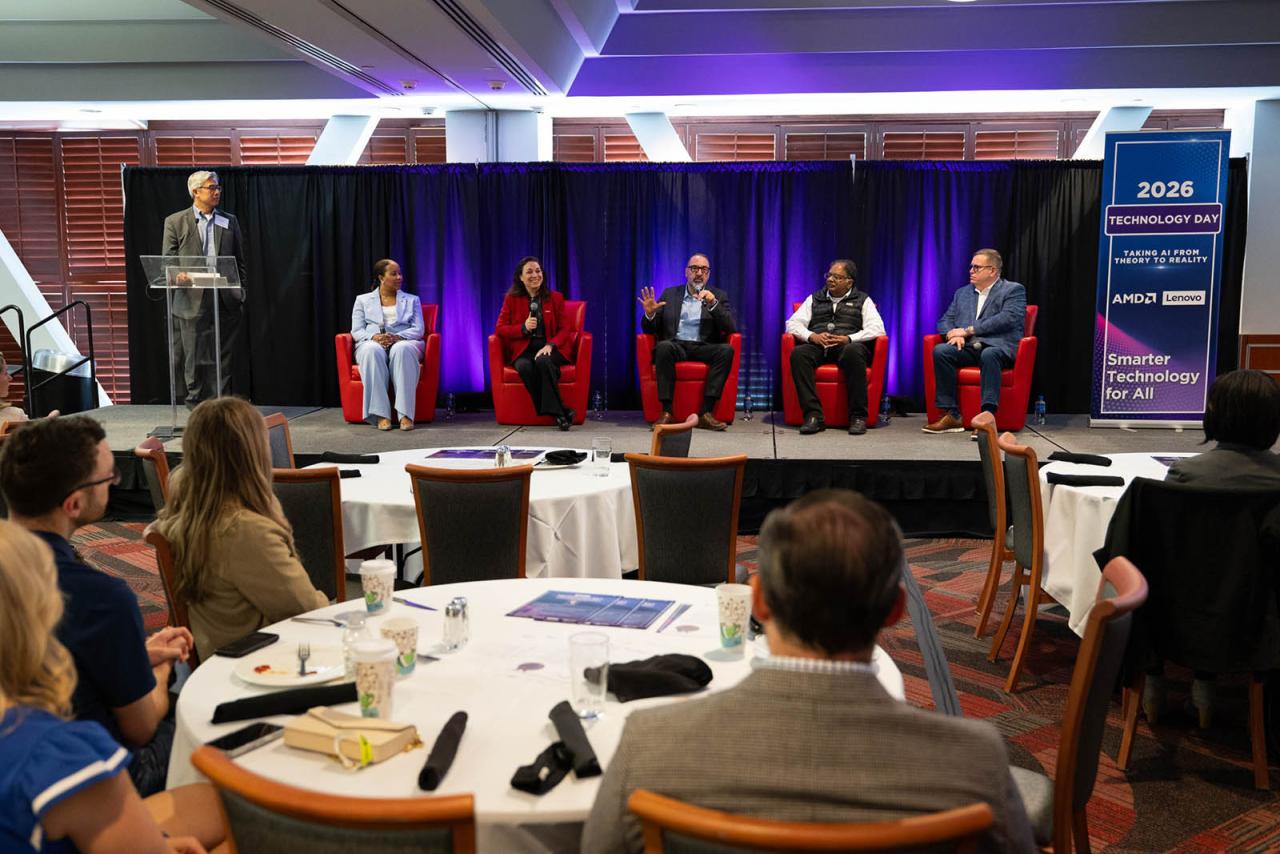
Industry leaders gathered for North Carolina Technology Day 2026, Lenovo's annual celebration of the state's tech innovation to discuss the opportunities, challenges, and real-world applications shaping the future of AI. In a panel discussion moderated by I-Sah Hsieh, deputy secretary for AI and policy at the North Carolina Department of Information Technology and leaders from AMD, Cisco, Lenovo, SAS, and North Carolina Central University explored topics ranging from cybersecurity and workforce development to data governance and responsible innovation.
AI Is Moving Into Everyday Operations
The prevailing theme of the discussion was that AI is no longer a future technology.
Panelists shared examples of how their organizations are integrating AI into daily operations, and how they are moving beyond pilot projects and experimentation. Kumaran Siva, corporate vice president of enterprise AI at AMD, described the company's evolution from early computer vision applications on manufacturing lines to broader enterprise adoption efforts that now touch multiple areas of the business.
Panelists noted that successful AI implementation requires more than access to powerful tools. Long-term success depends on infrastructure, governance, and employee readiness.
The conversation also addressed adoption challenges within organizations. Ada Lopez, senior manager of inclusive product design at Lenovo, said the technology itself is not the main barrier but the associated stigma of AI use as employees worry about how AI use will be perceived by their colleagues. Lopez said leaders can help remove the hesitation by sharing how they use AI in their own work, which can help foster an environment for AI experimentation.
Data Remains the Foundation
The public conversation around AI focuses on new models and capabilities; however, the panel repeatedly returned to a less visible topic: data.
New AI tools can only be as effective as the information that powers them. They emphasized the importance of data governance, access controls, and intellectual property protection as organizations expand their AI efforts.
"Your data layer is still the most important asset you have," Udo Sglavo, vice president of applied AI and modeling R&D at SAS, said. "Machine learning models do not unlearn. Once it's out there, it's out there."
The discussion highlighted a common trend: organizations often rush to evaluate new AI tools before establishing the policies and safeguards necessary to protect sensitive information. Panelists emphasized that even the most advanced technology can create unnecessary risks without this foundational work.
A New Era for Cybersecurity
The Impact of AI on Cybersecurity drew some of the most substantial commentary.
Omar Santos, distinguished engineer of cyber and AI security at Cisco, described how rapidly advancing AI capabilities are changing the threat landscape and lowering barriers for bad actors. "A teenager with $100 of API access on a frontier model can do what a nation-state was able to do last year," Santos said.
Despite those risks, Santos expressed optimism about the opportunities AI creates for defenders. He described how organizations use AI-powered tools to simulate attacks, identify vulnerabilities, and strengthen security posture at a speed that was previously impossible. "We can flip the table," Santos said. "We do have the opportunity right now to accelerate and modernize."
A key takeaway was that while AI has expanded the capabilities available to threat actors, it has also strengthened organizations' ability to identify threats and improve defenses.
Expanding Access to AI Education
The conversation extended beyond technology and into education, led by Dr. Siobahn Day Grady, founding director of the AI & Emerging Research Institute at NC Central University. Dr. Grady outlined the impact of the institute as it is the first AI Institute established at a historically Black college or university in the United States. It is supported by funding from Google.org and serves students from a wide range of academic backgrounds while also engaging community members outside the university.
"AI is for everyone," Grady said. "This moment is no different than when the internet arrived, and some people got left behind then too."
Rather than focusing exclusively on engineering or computer science students, the institute works to introduce AI concepts across disciplines. The panel agreed that broad AI literacy will be important as the technology blends into daily routine.
Human Judgment Still Matters
As AI systems become more capable, concerns about accountability continue to grow.
Discussion turned to where AI can operate independently and why human governance remains necessary. The panelists agreed that AI can streamline operations and enhance productivity, but responsibility should always remain with people. "Responsibility belongs to humans," Siva said. "That will never change, and that is what will underpin wherever AI actually takes us."
Sglavo reinforced that perspective. "Innovation and creativity are human traits," Sglavo said. "The technology will not solve our problems. We have to solve our problems using that technology."
AI's Human Impact
The most memorable discussion highlighted the people that utilize this technology, and the positive effect AI has had on their lives.
Lopez shared an example from Lenovo's work with the Scott-Morgan Foundation, which uses AI technology to help people living with ALS preserve their voice, stories, and likeness through digital avatars. The project also sparked discussion around privacy, ownership, and personal rights, highlighting broader considerations for policymakers, technology companies, and communities as advances in AI continue to outpace the laws and regulations designed to govern them.
Looking Ahead
The panel covered a variety of topics, but the following remained consistent throughout the conversation.
Organizations must invest in strong data practices before scaling AI.
Cybersecurity strategies will need to evolve alongside emerging threats.
AI literacy will become increasingly important.
As AI technology is optimized, human governance remains essential.
Panelists encouraged leaders to engage with AI now rather than wait for the technology to mature. "Use it. Build it. Make it better," Santos said. "We are now in the exponential. This thing will get significantly better next year."
For North Carolina's technology, business, and education leaders, the message was clear: the AI era is here. The focus has shifted from understanding what this technology can do to determining how it can be used responsibly and effectively.
Find more stories and multimedia from Lenovo at 3blmedia.com.
Contact Info:
Spokesperson: Lenovo
Website: https://www.3blmedia.com/profiles/lenovo
Email: info@3blmedia.com
SOURCE: Lenovo
View the original press release on ACCESS Newswire:
https://www.accessnewswire.com/newsroom/en/industrial-and-manufacturing/north-carolina-technology-day-2026-highlights-ai%e2%80%99s-growing-impact-acro-1197426
