
"The D.C. Circuit's decision could reshape federal marijuana policy, administrative law, and the future of FDA regulated cannabis medicines for years to come" stated Duane Boise CEO MMJ International Holdings.
WASHINGTON, D.C. / ACCESS Newswire / July 29, 2026 / The biggest marijuana case in America is no longer about whether cannabis should be legal.
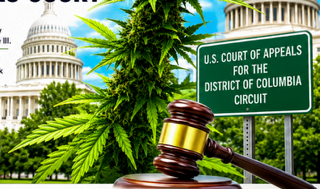
It is about whether the Executive Branch can fundamentally change federal drug policy without following the procedures Congress required.
In April 2026, the Attorney General issued an Order moving state licensed medical marijuana into Schedule III of the Controlled Substances Act while simultaneously creating an entirely new federal registration framework for state marijuana businesses.
MMJ International Holdings, Inc. is one of the petitioners asking the U.S. Court of Appeals for the District of Columbia Circuit to determine whether that Order was issued lawfully.
The Court's decision could influence not only marijuana policy, but how future administrations change the legal status of any controlled substance.
This Is Not a Case About Whether Marijuana Can Be Medicine
That question is not before the Court.
MMJ has spent nearly a decade and invested more than $10 million pursuing FDA regulated cannabinoid medicines for Huntington's disease and multiple sclerosis through the same federal process required of every pharmaceutical company. The company has obtained FDA Investigational New Drug applications, orphan-drug designation, manufactured GMP investigational soft-gel capsules through Catalent, operates a DEA-registered analytical laboratory, and has maintained a pending DEA bulk-manufacturer application since December 2018.
Instead, the Court is being asked a much narrower-but potentially more important-question:
Did the Attorney General follow the process Congress required before fundamentally changing federal marijuana law?
What Really Happened
According to MMJ's petition, Congress established a formal process for changing the scheduling of controlled substances, including rulemaking conducted on the record with an opportunity for an evidentiary hearing.
MMJ argues that the Attorney General instead relied upon a treaty-related statutory provision to issue the April 2026 Order without following that process.
The company further argues that the government simultaneously adopted entirely new regulatory provisions-including expedited DEA registration procedures for qualifying state-license holders and new import and export requirements-without first publishing those rules for public notice and comment as ordinarily required under the Administrative Procedure Act.
The Department of Justice disputes those claims and maintains the Order was lawfully issued.
Before the Court Reaches the Merits, It Must Decide Who Gets to Ask the Question
Federal courts do not issue advisory opinions.
Before deciding whether the Attorney General acted lawfully, the D.C. Circuit must first determine whether any petitioner has standing-that is, whether the challenged action caused a sufficiently concrete and legally cognizable injury.
For MMJ, the alleged injury is not simply disagreement with federal policy.
The company argues that after spending years following the federal pharmaceutical pathway while awaiting DEA action on its cultivation application, the April 2026 Order immediately conferred significant federal advantages on companies operating under state marijuana licenses, including a new registration pathway and other regulatory benefits, while MMJ's own federal application remained unresolved.
The Court's standing decision may ultimately determine whether it ever reaches the legality of the Order itself.
What Could the Court Do?
Several outcomes remain possible.
The Court could conclude that none of the petitioners has standing, ending the case without reaching the merits. This decision would be highly unlikely but possible.
It could determine that the Attorney General acted within his statutory authority and uphold the Order which is also highly unlikely.
If the Court concludes legal errors occurred, it could vacate the Order entirely, vacate only portions of it, or remand the matter to the government for additional proceedings while temporarily leaving the current framework in place.
Each remedy would carry very different consequences.
What Those Outcomes Could Mean
If the Court Dismisses the Case
The Attorney General's Order would remain in effect without any judicial determination regarding whether it complied with the Controlled Substances Act or the Administrative Procedure Act.
State-licensed medical marijuana businesses would continue operating under the current federal framework, including the existing treatment of Section 280E for qualifying activities and the expedited DEA registration process created by the Order.
If the Court Upholds the Order
The decision would reinforce the government's interpretation of its authority under the Controlled Substances Act and could become an important precedent governing future scheduling decisions involving other controlled substances.
It would also leave intact the dual regulatory landscape that MMJ argues places companies pursuing FDA approval at a competitive disadvantage.
If the Court Vacates the Order
A complete vacatur would likely restore the legal framework that existed before April 2026 while the government determines its next steps.
Potential consequences would include renewed uncertainty regarding federal tax treatment for qualifying marijuana businesses, questions concerning registrations and applications processed under the expedited framework created by the Order, additional review by exchanges, lenders, investors, auditors and regulators, and renewed rulemaking before any future rescheduling could become effective.
State-licensed operators would not automatically cease operating. They conducted business under state law for years before the April 2026 Order while marijuana remained a Schedule I controlled substance under federal law. The principal consequences would likely be regulatory, financial and administrative rather than operational.
If the Court Vacates Only Part of the Rule
The Court could determine that certain regulatory provisions-such as the expedited registration procedures or import and export rules-must be reconsidered while leaving the underlying scheduling decision in place.
MMJ argues that those provisions are legally intertwined and cannot be separated. Whether the Court agrees will be one of the significant questions presented.
If the Court Remands Without Vacating
The Court could conclude that legal errors occurred but allow the current framework to remain temporarily while directing the government to conduct additional proceedings consistent with the law.
For businesses, this would likely be the least disruptive outcome because existing regulatory arrangements could continue while the government corrects whatever deficiencies the Court identifies.
For MMJ, however, the broader principle would remain significant. The company argues that any nationwide change to federal marijuana scheduling should occur only through the procedures Congress required-including a formal evidentiary hearing where affected parties may present evidence, cross-examine witnesses, and build an administrative record subject to judicial review.
Why This Case Matters Beyond Marijuana
This appeal reaches far beyond cannabis policy.
It asks how much discretion the Executive Branch possesses when Congress has already established procedures governing federal rulemaking.
The Court's decision could influence how future administrations regulate controlled substances, define the limits of executive authority, and clarify when agencies must provide formal hearings and public participation before implementing major regulatory changes.
MMJ's Position
"We are not asking the Court to decide whether cannabis can be medicine," said Duane Boise, Chief Executive Officer of MMJ International Holdings.
"We have spent nearly a decade following the federal process established to answer that question through science, clinical research and FDA oversight. This appeal asks something even more fundamental: when Congress writes the rules for changing federal drug law, does the Executive Branch have to follow them? We believe the answer is yes."
What Happens Next?
Briefing in the consolidated appeals has been completed.
The D.C. Circuit may first resolve threshold issues, including standing and any requests for interim relief, before issuing a decision on the merits. If the Court reaches the merits, its decision could become one of the most significant administrative-law rulings involving controlled substances in decades.
Separately, MMJ's DEA bulk-manufacturer application-pending since December 2018 and awaiting final action by the DEA Administrator since July 2025-remains unresolved and could be decided independently of the appeal.
About MMJ International Holdings
MMJ International Holdings, Inc., through its subsidiaries MMJ BioPharma Cultivation, Inc. and MMJ BioPharma Labs, Inc., is developing FDA-regulated cannabinoid medicines for Huntington's disease and multiple sclerosis. The company has pursued the federal pharmaceutical pathway since 2017, maintains a DEA-registered analytical laboratory, and continues to seek DEA authorization to cultivate marijuana for federally regulated pharmaceutical research.
CONTACT:
Madison Hisey
MHisey@mmjih.com
203-231-8583
This statement describes an ongoing court case and reflects MMJ's position as a party to it. It is not legal, tax or investment advice, and it does not predict any outcome. The possible rulings described are illustrative of what courts can do in cases like this. The case is SAM Inc. v. Department of Justice, Nos. 26-1106, 26-1130 and 26-1136, in the U.S. Court of Appeals for the D.C. Circuit. The rule at issue was published at 91 Fed. Reg. 22714 (Apr. 28, 2026). Timing estimates are approximate and up to the court.
SOURCE: MMJ International Holdings, Inc.
View the original press release on ACCESS Newswire:
https://www.accessnewswire.com/newsroom/en/healthcare-and-pharmaceutical/marijuana-rescheduling-in-jeopardy-a-federal-court-is-about-to-decide-1198262
