

VANCOUVER, BC / ACCESS Newswire / April 15, 2026 / Grande Portage Resources Ltd. (TSXV:GPG)(OTCQB:GPTRF)(FSE:GPB) ("Grande Portage" or the "Company") is pleased to announce positive results from the Preliminary Economic Assessment ("PEA") study of its New Amalga Gold Project ("New Amalga" or the "project"), located approximately 25km north of the city of Juneau in Southeast Alaska, USA.
A National Instrument 43-101 - Standards of Disclosure for Mineral Projects ("NI 43-101") compliant technical report (the "Report") entitled "PRELIMINARY ECONOMIC ASSESSMENT FOR THE NEW AMALGA GOLD PROJECT" with an effective date of February 11, 2026 will be filed on SEDAR+ at www.sedarplus.ca under the Company's profile within 45 days of this news release. All currency amounts are stated in US dollars (US$).
This is the first PEA study that has been conducted for the project. A resource model update was not performed for this study, which utilizes the company's previously-disclosed 2024 resource statement as originally documented in the NI 43-101 report ("TECHNICAL REPORT ON THE HERBERT GOLD PROPERTY") with an effective date of July 17, 2024.
The New Amalga project hosts a near-surface mesothermal gold resource with grade and characteristics enabling the material to be sold without requiring conventional onsite processing or tailings storage facilities. The project site is located near existing transportation infrastructure and the Report outlines a low-footprint, low-initial-capital scenario with a selective underground mine transporting material offsite for processing at third-party facilities. With a robust NPV and IRR, the Company believes the New Amalga Gold Project offers exceptional potential economics as described in the sections below.
ECONOMIC & PRODUCTION HIGHLIGHTS
The Base Case using a $3,200/oz gold price generates a pre-tax Internal Rate of Return ("IRR") of 69% (after-tax 56%) and a pre-tax net present value ("NPV") at a 5% discount rate of US$979 million (after-tax US$721 million).
1.1 year pre-tax payback (1.3 year after-tax) on invested capital at the Base Case gold price.
Based on price sensitivity analysis at the recent spot gold price of approximately US$5,000/oz, the project returns a pre-tax IRR of 109% (after-tax 91%) and a pre-tax NPV at a 5% discount rate of US$2,128 million (after-tax US$1,557 million) with an after-tax payback period of 0.8 years.
The PEA production plan incorporates an underground mine with a Base Case production life of 7 years with total production of 1.05 million gold ounces shipped.
Gold production averages approximately 150,000 ounces shipped per year.
Average shipped gold grade of 17.6 g/t (after sorting), average mined gold grade of 13.6 g/t (before sorting).
Pre-Production Capital Cost (CAPEX) of US$254.8M (including US$46.4M contingency).
Operating Cost (OPEX) of US$272 per production tonne mined including mining, sorting, overland and seaborne transportation, and minesite G&A.
All-in Sustaining Cost (AISC) of $1,408 per ounce payable, inclusive of operating costs, sustaining capital costs, royalty payments, treatment costs and refining costs.1
Ian Klassen, President & CEO remarked that "The strong results of the PEA confirm our contention that the project's offsite processing strategy is the optimal development pathway, with high margins, rapid payback, and straightforward engineering combined with a very small environmental footprint. This PEA positions the project well for the future, where detailed design, capital optimization, baseline environmental studies and permitting can advance with confidence."
The following table summarizes the pre-tax and after-tax financial indicators for the New Amalga Gold Project at the base case $3,200/oz gold price.
Table 1: Financial Indicators at $3,200/oz Base Case Gold Price
Pre-Tax NPV5 | $979 | M USD |
Pre-Tax IRR | 69% |
|
After-Tax NPV5 | $721 | M USD |
After-Tax IRR | 56% |
|
Avg NSR per Tonne Mined (net of royalty) | $1,042 | US$ / metric tonne mined |
Operating Cost per Production Tonne Mined | $272 | US$ / metric tonne mined |
Operating Cost per Gold Ounce Shipped | $630 | US$ / ounce shipped |
LOM All-in Sustaining Cost (AISC)1 | $1,408 | US$ / ounce payable |
Pre-Production CAPEX per Ounce Payable | $285 | US$ / ounce payable |
Initial Capital Payback Period (after-tax) | 1.3 | years |
The following table summarizes the gold price sensitivity of the pre-tax and post-tax economic results.
Table 2: Pre-Tax and Post-Tax Sensitivity to Gold Price
| Pre-Tax | After-Tax | ||
Au Price ($/oz) | NPV5 ($M) | IRR | NPV5 ($M) | IRR |
$1,600 | -$42 | -1% | -$63 | -5% |
$1,800 | $86 | 15% | $42 | 10% |
$2,000 | $213 | 26% | $143 | 20% |
$2,200 | $341 | 35% | $241 | 28% |
$2,400 | $468 | 43% | $339 | 35% |
$2,600 | $596 | 50% | $435 | 41% |
$2,800 | $724 | 57% | $532 | 46% |
$3,000 | $851 | 63% | $627 | 52% |
(Base Case) $3,200 | $979 | 69% | $721 | 56% |
$3,400 | $1,107 | 74% | $815 | 61% |
$3,600 | $1,234 | 79% | $909 | 65% |
$3,800 | $1,362 | 84% | $1,002 | 70% |
$4,000 | $1,489 | 88% | $1,095 | 73% |
$4,200 | $1,617 | 93% | $1,188 | 77% |
$4,400 | $1,745 | 97% | $1,280 | 81% |
$4,600 | $1,872 | 101% | $1,373 | 84% |
$4,800 | $2,000 | 105% | $1,465 | 88% |
(Recent Spot Price Case) $5,000 | $2,128 | 109% | $1,557 | 91% |
$5,200 | $2,255 | 112% | $1,650 | 94% |
$5,400 | $2,383 | 116% | $1,742 | 97% |
$5,600 | $2,510 | 119% | $1,835 | 100% |
$5,800 | $2,638 | 123% | $1,927 | 103% |
Initial capital expenditures are estimated at US$254.8M as detailed below:
Table 3: Initial (Pre-Production) Capital Expenditures (CAPEX)
Pre-Production CAPEX | Cost $M USD |
Eng. & Env. Studies, Definition Drilling, Permitting, Owner's Construction Mgmt. Team | $16.9 |
Mine Access Road | $9.4 |
Mine Site Surface Facilities | $73.6 |
Surface Haulage Equipment & Ore Containers | $9.9 |
UG Pre-Production Capital Development | $22.0 |
UG Equipment (Mobile & Fixed) | $47.0 |
Ore Loading Dock | $12.3 |
Indirect Costs (10%) | $17.4 |
Contingency applied to Equipment Purchases (15%) | $8.5 |
Contingency applied to Construction, UG Dev't, & all other pre-production activities (25%) | $37.9 |
Total Pre-Production CAPEX | $254.8 |
The mine operating costs were calculated to average $272.11 per tonne mined as summarized below. Note that some operating costs apply per tonne of production mined, while others apply per tonne shipped, and G&A is an annual fixed cost.
Table 4: Components of Operating Cost (OPEX)
Mining & Backfilling OPEX | $114.70 | US$ / metric tonne of mined production |
Crushing & Ore Sorting OPEX | $7.00 | US$ / metric tonne of mined production |
Surface Road Haulage to Barge Dock OPEX | $11.16 | US$ / metric tonne of shipped production |
Barging to Deepwater Port, Storage, and Transloading | $39.67 | US$ / metric tonne of shipped production |
Bulk Freighter Vessel Transport to Overseas Processor | $95.00 | US$ / metric tonne of shipped production |
Overhead G&A (staff, environmental, insurance, etc) | $13.7 | US $ annually (millions) - fixed cost |
LOM Overall Average Operating Cost | $272.11 | US$ / metric tonne of mined production |
Life-of-Mine sustaining capital totals $269.3M and is summarized in the table below.
Table 5: Sustaining CAPEX
Sustaining CAPEX | Cost $M USD |
Sustaining UG Development & Definition Drilling | $172.4 |
Sustaining Mine Equipment & Rebuilds | $26.9 |
Indirect Costs (10%) | $19.9 |
Contingency applied to Equipment Purchases/Rebuilds (15%) | $7.0 |
Contingency applied to UG Dev't and Drilling (25%) | $43.1 |
Total Sustaining CAPEX | $269.3 |
MINERAL RESOURCES
The PEA utilizes the previously-released Mineral Resource Estimate prepared by DRW Geological Consultants Ltd., with an effective date of July 17, 2024. Details of this Mineral Resource Estimate can be found in the PEA Report to be filed on SEDAR+ within 45 days of this release.
Utilizing a base case cut-off of 2.5 gpt, the nine veins on the property host an Indicated Mineral Resource of 4,726,000 tonnes at a grade of 9.47 gpt (1,438,500 ounces of gold and 891,000 ounces of silver at 5.86 gpt) and an Inferred Mineral Resource of 1,813,000 tonnes at a grade of 8.58 gpt (515,700 ounces of gold and 390,600 ounces of silver at 6.70 gpt) using a 181 gpt top cut.
The mineral resource sensitivity to cutoff grade is shown below.
Table 6: Sensitivity Table showing Indicated Mineral Resource by cut-off
Cut-off (g/t) | Tonnes | Grade Au (g/t) | Grade Ag (g/t) | Ounces Au | Ounces Ag |
3.0 | 3,931,000 | 10.83 | 6.60 | 1,368,400 | 834,600 |
2.5 | 4,726,000 | 9.47 | 5.86 | 1,438,500 | 891,000 |
2.0 | 5,654,000 | 8.28 | 5.21 | 1,505,500 | 946,900 |
Table 7: Sensitivity Table showing Inferred Mineral Resource by cut-off
Cut-off (g/t) | Tonnes | Grade Au (g/t) | Grade Ag (g/t) | Ounces Au | Ounces Ag |
3.0 | 1,562,000 | 9.82 | 7.34 | 493,300 | 368,400 |
2.5 | 1,813,000 | 8.58 | 6.70 | 515,700 | 390,600 |
2.0 | 2,383,000 | 7.26 | 5.59 | 556,400 | 428,300 |
A top cut of 181 gpt gold is applied to all zones
Mineral Resources are not Mineral Reserves and do not have demonstrated economic viability.
Conforms to NI 43-101, Companion Policy 43-101CP, and the CIM Definition Standards for Mineral Resources and Mineral Reserves. Inferred Resources have been estimated from geological evidence and limited sampling and must be treated with a lower level of confidence than Measured and Indicated Resources.
All numbers are rounded. Overall numbers may not be exact due to rounding.
MINE PLAN
The mine plan is conceived as an underground operation with a production rate of 1,150 tpd utilizing a gold cutoff grade of 7.0 g/t. This cutoff criteria is driven by the minimum shipment grade required for offtake payability and is not a conventional marginal-cost-breakeven cutoff. The primary mining method will be longitudinal longhole open stoping supplemented by a much smaller amount of cut-and-fill mining reserved for zones of lower rock mass quality.
The mine will be accessed via a 900m decline initiated from a surface portal. No shaft sinking is necessary. Ventilation and secondary escapeway will be achieved via raisebore to surface. Haulage ramps will be progressively developed to access all mining areas within the various resource veins. Mine development is assumed to be undertaken by a contractor and will incorporate cover drilling and pressure grouting on advance to control potential water inflows. None of the underground workings lie beneath the Herbert Glacier.
As there will be no tailings onsite, stope backfill will consist of cemented rockfill (CRF) batched on surface using development waste rock. Production haul trucks will bring CRF underground on the back-haul.
Mined production output consists of 2,438 kt at a grade of 13.6 g/t (before sorting) over a seven-year production life.
The image below shows a 3-D view of the underground mine when all development and production activities are complete.
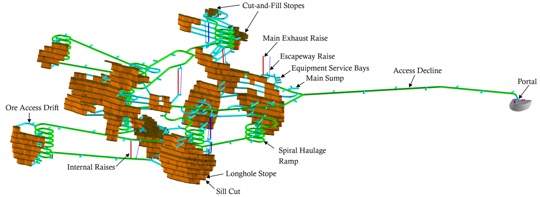
Figure 1: 3-D View of Underground Mine Plan
The image below shows a side view of the mining layout with overlying terrain.
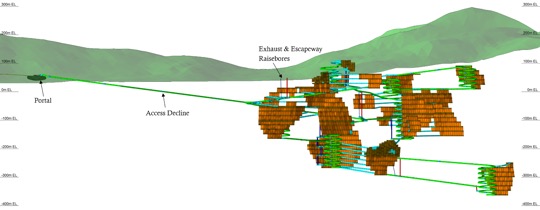
Figure 2: Side View of Underground Mine Plan Looking North, Showing Overlying Surface Terrain
INFRASTRUCTURE & LOGISTICS
The project site will be accessed via a new 5.2km access road connecting to Glacier Highway, a paved public highway connecting to the city of Juneau. No personnel housing camp facilities are planned, rather the workforce will be transported by crew bus from Juneau for each shift as the site will be only an approximately 35-minute drive from the Juneau suburbs. The city of Juneau serves as a regional mining hub currently supporting two major underground mines, with a skilled local mining workforce and equipment maintenance facilities.
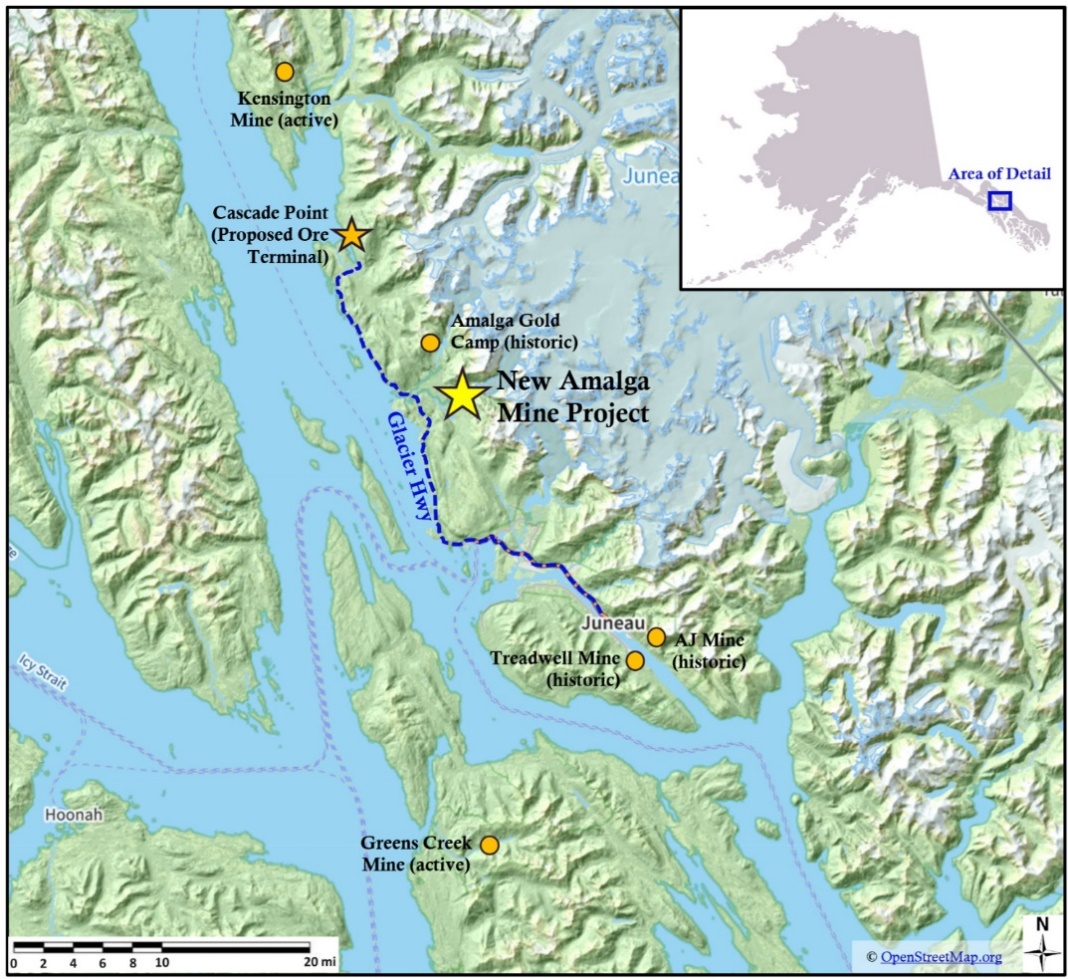
Figure 3: Project Location Relative to Juneau, Cascade Point and Glacier Highway
The mine site will include surface infrastructure typical of most underground mines such as an administrative office, vehicle maintenance shop, fueling facilities, backfill batch plant, and water treatment plant. Power will be generated onsite using diesel generators, with the potential to tie in to grid power pending the planned future development of a new third-party hydroelectric facility in the region.
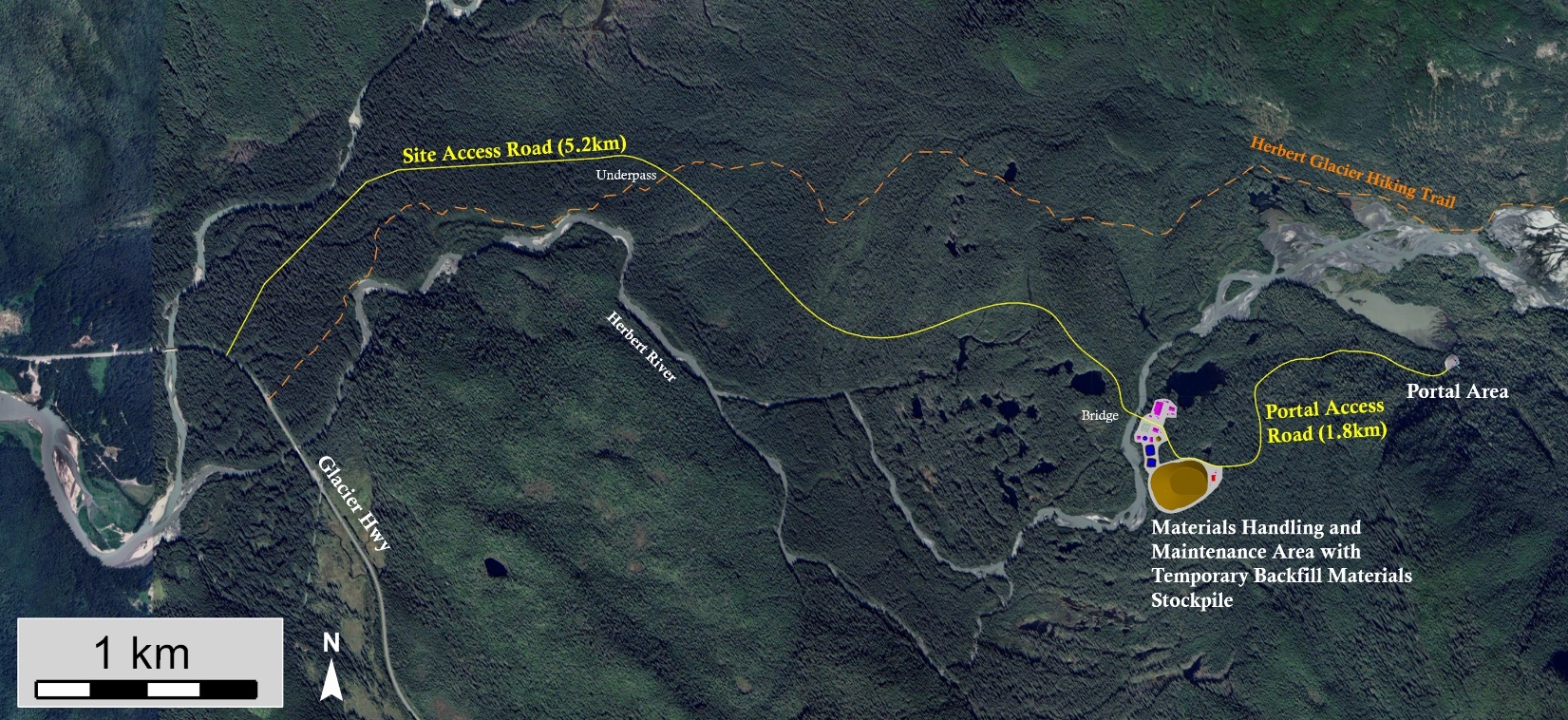
Figure 4: Conceptual Surface Infrastructure Layout Utilized for the PEA. Layout may change pending further environmental baseline studies, engineering, environmental review and permitting processes.
Production rock will be crushed to a 100mm topsize and subjected to a sensor-based ore sorting process wherein each particle of rock will be scanned while passing under a sensor array on a conveyor belt. Particles identified as non-mineralized (dilution) will be removed to a reject bin via a puff a compressed air, while the remaining particles will be loaded into a sealed ore container for transport. See the company's April 8, 2025 news release for additional information regarding sensor-based ore sorting of New Amalga material.
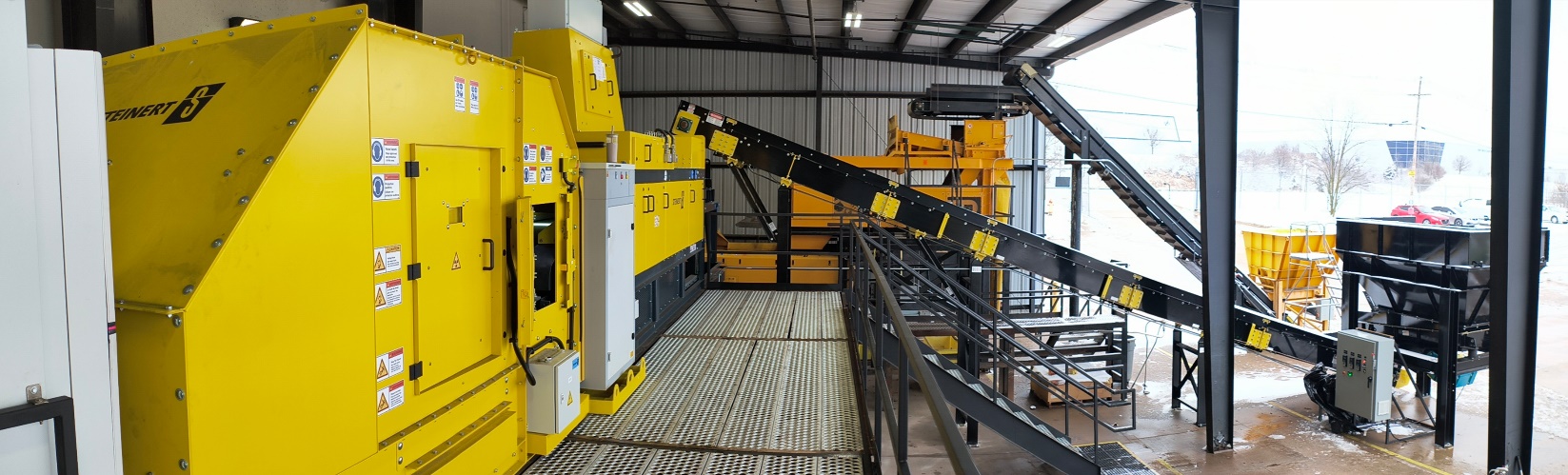
Figure 5: Steinert Sensor-Based Ore Sorting Machine
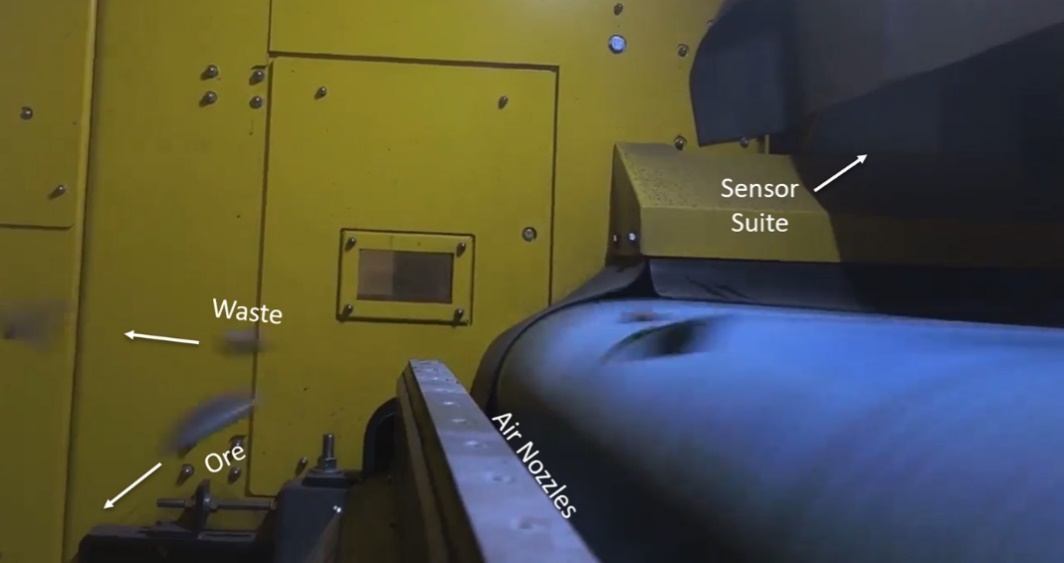
Fig. 6: Removal of Dilution Inside Steinert Ore-Sorting Machine
The ore sorter reject rock along with waste rock from underground development will be staged in the Temporary Backfill Materials Stockpile. This lined stockpile will be progressively drawn down during the mine life to feed the batch plant for making CRF backfill. The stockpile will be completely returned underground before closure.
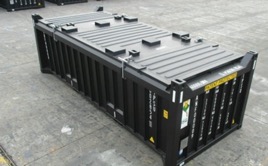
Fig. 7: "Rotainer" type Ore Container
Ore containers will be loaded onto flat-deck trailers and trucked approximately 32km north via Glacier Highway to a barge dock facility. Conventional single trailers will be utilized (not double/tandem units). While mining operations continue 24/7, haulage operations will be paused on weekends and holidays during warm weather months since most of the private vehicle traffic on this segment of highway is for recreational access to campgrounds, beaches and other wilderness sites.
Once at full production there will be approximately 36 truck cycles per 12-hour shift. This is roughly one truck leaving the site every 20 minutes on average, however trucks may travel in convoys at less-frequent intervals to increase traffic efficiency on the single-lane site access road as well as to reduce perceived frequency of traffic noise.
The barge dock will be built at Cascade Point, a private parcel owned by Goldbelt Inc., an Alaska Native Corporation. See the Company's September 10, 2024 news release for additional information regarding the Company's relationship with Goldbelt and the Cascade Point site. This site is also the location for a planned Alaska Marine Highway System (AMHS) ferry terminal being developed by the Alaska Department of Transportation. While limited amounts of infrastructure (such as the Cascade Point access road) could be shared, the barge dock will be a separate part of the site and is not dependent or contingent upon construction of the ferry terminal; this study assumes that no further development of the site is undertaken as part of the ferry terminal project.
At the barge dock, containers will be unloaded into a small staging yard and then loaded onto barges for transport to deepwater port facilities in British Columbia, where the containers would be emptied and the material loaded onto trans-oceanic bulk vessels for overseas processing. Empty containers would be returned to the minesite on the back-haul for reuse.
Over the life-of-mine plan the shipments of sorted material total 1,859 kt at a grade of 17.6 g/t Au, containing approximately 1,053 koz Au.
OFFTAKE
The Company has received indicative offtake terms for the New Amalga production from a major global metals concentrate trading firm. See the Company's October 20, 2025 news release for additional information. The sorted material will ultimately be sold to a variety of potential overseas processors, primarily base metals smelters. The PEA utilized the indicative term sheet which incorporated variable gold payability based on shipment grade (average approximately 85% over the mine life), treatment charges of $95/tonne, a refining charge of $10/oz Au payable, and a minimum shipment gold grade of 7.0g/t for payability. Silver is present at low grades in the sorted material and is not payable.
PERMITTING, ENVIRONMENTAL PROTECTION & SOCIAL LICENSE
The PEA Report envisions a small-footprint underground mining operation which would transport material offsite for processing by a third party, eliminating the need for an onsite gold recovery plant or tailings storage facility.
In addition to reducing up-front capital cost, this setup provides numerous environmental benefits compared to a conventional onsite-processing configuration:
Eliminates the need to build a gold recovery plant, minimizing developed footprint, power and water requirements.
No use of chemical reagents for gold processing at the site.
Eliminates the need to develop a tailings disposal facility at the site, as no tailings would be generated.
Removes the need for permanent waste rock storage facilities. All waste rock generated from mine development would be returned to the underground workings as backfill, avoiding permanent significant change to the local surface topography.
Dramatically reduces land usage and overall environmental footprint.
Greatly facilitates post-mining closure and reclamation.
In addition to environmental stewardship, the New Amalga Gold Project is also committed to being a good neighbor to the Juneau community by minimizing impacts to the surrounding area while providing extensive economic benefits to the region. Specific examples include:
Strategic siting of surface infrastructure to minimize visual and noise impacts to the Herbert Glacier hiking trail
Pausing haulage operations to the barge dock on weekends and holidays during warm weather months to minimize truck traffic for recreational visitors to the area
Road transport and barge transport in fully-enclosed ore containers instead of as loose/bulk material. This serves to mitigate against airborne dust during product movement and transloading.
Utilizing crew buses for workforce transportation to minimize commuter traffic from Juneau
Creation of an estimated 277 mining-wage direct jobs (not accounting for indirect or induced employment) which will be prioritized for Juneau-area residents aligned with the plan for a non-camp-based commuter workforce
Payment of local property tax, Alaska Corporate Income Tax, and Alaska Mining License Tax which will help support the local community and the broader region.
The Project will be subject to NEPA environmental review with the US Forest Service and will also require a variety of federal, state, and local permits. The Company has been engaging with the relevant agencies at both the state and federal levels to establish alignment and prepare for the upcoming regulatory processes.
TECHNICAL REPORT AND QUALIFIED PERSONS
The Report entitled "PRELIMINARY ECONOMIC ASSESSMENT FOR THE NEW AMALGA GOLD PROJECT" with an effective date of February 11, 2026 and which will be prepared by the following Qualified Persons (as defined under NI 43-101), all of whom are independent of the Company, will be filed by the Company within 45 days of this news release on www.sedarplus.com:
Mr. Jack DiMarchi, CPG, PG (Core Geoscience LLC) - Environmental Studies, Permitting, and Social or Community Impact
Dan Mackie, P.Geo. (SRK Consulting Canada Inc.) - Hydrogeological Factors
Kyle Mehalek, PE (OreLogic LLC) - Property Description and Location, Accessiblity, Climate, Local Resources, Infrastructure and Physiography, Mineral Processing and Metallurgical Testing, Mining Methods, Recovery Methods, Project Infrastructure, Market Studies and Contracts, Economic Analysis
Bruce Murphy, P.Eng. (SRK Consulting Canada Inc.) - Geotechnical Factors
Sterling Watson, P.Eng. (RESPEC Inc.) - Capital and Operating Costs
Dr. Dave Webb, Ph.D., P.Eng., P.Geo., (DRW Geological Consultants Ltd.) - History, Geological Setting and Mineralization, Deposit Types, Exploration, Drilling, Sample Preparation, Analysis and Security, Data Verification, Mineral Resource Estimate
The PEA Report is preliminary in nature; it includes inferred Mineral Resources that are considered too speculative geologically to have the economic considerations applied to them that would enable them to be categorized as Mineral Reserves, and there is no certainty that the PEA will be realized. There is no Mineral Reserve at the New Amalga Gold Project at this time, and therefore no material which would meet the definition of "ore" under NI 43-101. Mineral resources that are not mineral reserves do not have demonstrated economic viability. The word "ore" is therefore used in this news release only in the context of referring to specific equipment, processes or installations, such as "Ore Sorting", "Ore Container", etc.
2026 FORWARD LOOKING PLAN
The New Amalga Gold Project PEA Report economics justify continued investment in project development. The forward-looking plan for the Project includes work required to advance the project through the environmental review and permitting process along with continued progression of project design and economic optimization, including ongoing investigation into all potential processing options. As noted in the PEA Report, higher gold payabilities and potential for reduced transportation costs may be achieved by sending the material to a regional facility for CIP/CIL leaching and refining into doré bars. This has the potential to enhance Project cashflows and NPV compared to the Base Case. Such facilities exist within the region, however to date their availability has been constrained by various factors.
Planned 2026 tasks include:
Approximately 4,300 meters of diamond drilling from up to 14 drillholes, installation of downhole instrumentation, surface mapping, and trench sampling. A key recommendation noted in the PEA, this program will characterize the geotechnical and hydrogeological aspects of the deposit rock mass in order gather data necessary for the environmental review and permitting process as well as to inform mine development plans. It will also provide additional definition towards upgrading resource classification.
Construction of environmental monitoring infrastructure including meteorological stations and stream monitoring equipment. These installations will not only inform the environmental review and permitting process but will also serve as long-term infrastructure for monitoring during future operations.
Preparing for construction of the initial segment of site access road across State land, pending receipt of a State of Alaska easement (currently in the Agency Review and Public Notice process)
Numerous environmental baseline studies necessary for the environmental review and permitting process including wildlife and avian surveys, wetlands surveys, ongoing surface water sampling, cultural and archeological surveys, geochemical studies, socioeconomic studies, and more.
Additional engineering work to prepare a formal Plan of Operations used as the basis for environmental review & permitting
ON BEHALF OF THE BOARD
"Ian Klassen"
Ian M. Klassen
President & Chief Executive Officer
Tel: (604) 899-0106
Email: Ian@grandeportage.com
About Grande Portage:
Grande Portage Resources Ltd. is a publicly traded mineral exploration company focused on advancing the New Amalga Mine project, the outgrowth of the Herbert Gold discovery situated approximately 25 km north of Juneau, Alaska. The Company holds a 100% interest in the New Amalga property. The New Amalga gold system is open to length and depth and is host to at least six main composite vein-fault structures that contain ribbon structure quartz-sulfide veins. The project lies prominently within the 160km long Juneau Gold Belt, which has produced over eight million ounces of gold.
PEA Information and Cautionary Note Regarding Inferred Mineral Resources
The mine plan evaluated in the PEA is preliminary in nature and includes Inferred Mineral Resources, as defined by NI 43-101 that are considered too speculative geologically to have the economic considerations applied to them that would enable them to be converted to Mineral Reserves. Additional drilling and technical studies will need to be completed in order to fully assess its viability. There is no certainty that a production decision will be made to develop the New Amalga Gold Project or that the economic results described in the PEA will be realized. Mine design and mining schedules, metallurgical flow sheets and process plant designs will require additional detailed work and economic analysis and internal studies to ensure satisfactory operational conditions and decisions regarding future targeted production. There is no Mineral Reserve at the New Amalga Gold Project at this time, and therefore no material which would meet the definition of "ore" under NI 43-101. Mineral resources that are not mineral reserves do not have demonstrated economic viability. There is no certainty that Inferred Mineral Resources will be converted to Measured or Indicated Mineral Resources or that any part of the Mineral Resources discussed herein will be converted to a Mineral Reserves in the future. The word "ore" is therefore used in this news release only in the context of referring to specific equipment, processes or installations, such as "Ore Sorting", "Ore Container", etc.
For a description of the data verification process and limitations, underlying assumptions and the results of quality assurance program regarding exploration information, please refer to the Company's NI 43-101 Technical Report entitled "PRELIMINARY ECONOMIC ASSESSMENT FOR THE NEW AMALGA GOLD PROJECT" with an effective date of February 11, 2026 which will be filed on SEDAR+ at www.sedarplus.ca under the Company's profile within 45 days of this news release.
Kyle Mehalek, P.E.., is the QP within the meaning of NI 43-101 and has reviewed and approved the technical disclosure in this release. Mr. Mehalek is independent of Grande Portage within the meaning of NI 43-101.
Cautionary Note to U.S. Investors
The United States Securities and Exchange Commission permits U.S. mining companies, in their filings with the SEC, to disclose only those mineral deposits that a company can economically and legally extract or produce. We use certain terms in this report, such as "measured," "indicated," "inferred," and "resources," that the SEC guidelines strictly prohibit U.S. registered companies from including in their filings with the SEC.
Non-GAAP Financial Measures
The Company has referred to certain financial measures or ratios, including all in sustaining cost per ounce, in this news release that are not recognized under International Financial Reporting Standards ("IFRS") and accordingly are non-GAAP financial measures. These measures and ratios have no standardized meaning under IFRS and therefore may not be comparable to similar measures presented by other companies. The Company has included these measures to provide additional information, but they should not be considered in isolation and should be considered with the Company's financial statements and the measure contained therein. The Company believes that the all-in sustaining cost measure complements existing IFRS measures and ratios reported by the Company and provide investors with additional information to evaluate the Company. All-in Sustaining Cost (AISC) is calculated by adding a mine's operating cash costs to its ongoing sustaining capital expenditures, such as equipment replacement and progressive mine development to access the full extent of the mineralized to be mined, which are required to maintain production levels. By also incorporating treatment and refining charges and metal payability, AISC provides a comprehensive metric that reflects the total economic cost of producing and selling an ounce of gold over the long term after the mine has been built. Because AISC has been provided on a forward-looking basis, the Company is unable to present a quantitative reconciliation to the most directly comparable historical measures under IFRS.
Cautionary Statement Regarding Forward-Looking Information
This news release includes certain "forward-looking information" under applicable Canadian securities legislation. Forward-looking information include estimates and statements that describe the Company's future plans, objectives or goals, including words to the effect that the Company or management expects a stated condition or result to occur. Forward-looking information may be identified by such terms as "believes", "anticipates", "expects", "estimates", "may", "could", "would", "will", or "plan". Forward-looking information contained in this news release include, but are not limited to, statements or information with respect to: the results of the PEA, including the IRR and NPV, life of mine and production, capital and operating expenditures, cost estimates; permitting restrictions, and the mine plan, including infrastructure requirements, including the barge dock at Cascade Point, and future plans, in addition to potential for higher gold payabilities and potential for reduced transportation costs by sending material to a regional facility for CIP/CIL leaching and refining into doré bars resulting in the potential to enhance Project cashflows and NPV compared to the Base Case; the filing of the PEA, including timing thereof; mineral resources; offtake terms; environmental benefits of mine plan; expected social and economic benefits to the Juneau region; plans for 2026, including drilling, construction and studies and timing thereof; and future gold prices. Since forward-looking information are based on assumptions and address future events and conditions, by their very nature they involve inherent risks and uncertainties as described in the Company's filings with Canadian securities regulators. Assumptions upon which forward-looking information contained in this news release is based, without limitation, include: results of future exploration; gold prices; accuracy of the results of the PEA, including key assumptions and methods used to determine mineral resources and the results of the PEA; the ability to obtain required permits and approvals; the ability to execute future plans; exchange rates; ability to obtain funding; and changes in regulatory or community environment; Risks, and uncertainties include: results of further exploration; risks related to mineral tenure, permits and approvals; risks related to the execution of future plans; changes in gold price and exchange rates; risks related to obtaining financing; foreign country risks; regulatory risks and liabilities; and those risks and uncertainties as further described in the Company's filings with Canadian securities regulators which can be found on SEDAR+ at www.sedarplus.ca under the Company's profile. There can be no assurance that such information will prove to be accurate, as actual results and future events could differ materially from those anticipated in such information. Accordingly, readers should not place undue reliance on forward-looking information. The Company disclaims any intention or obligation to update or revise any forward-looking information, whether as a result of new information, future events or otherwise, other than as required by law.
NEITHER THE TSX VENTURE EXCHANGE NOR ITS REGULATION SERVICE PROVIDER (AS THAT TERM IS DEFINED UNDER THE POLICIES OF THE EXCHANGE) ACCEPTS RESPONSIBILITY FOR THE ADEQUACY OR ACCURACY OF THIS NEWS RELEASE
1 AISC is a non-GAAP measure. Please see below under the heading "Non-GAAP Financial Measures" below.
SOURCE: Grande Portage Resources Limited
View the original press release on ACCESS Newswire:
https://www.accessnewswire.com/newsroom/en/metals-and-mining/grande-portage-resources-announces-results-of-preliminary-economic-assessment-pea-1157581
