



As artificial intelligence (AI) continues to take hold across all industries, Adam Weinstein, MD, chief medical information officer for DaVita, highlights how new technological capabilities also help make the human connection more central to healthcare.
NORTHAMPTON, MA / ACCESS Newswire / April 7, 2026 / Recently, a New York Times article explored the question of whether advancements to AI in medicine could reduce the value of a doctor. Do you see this taking place - or is AI redefining that value?
Dr. Weinstein: I think AI changes the balance of how doctors work rather than reduces the value of that work.
Technology has always shaped and reshaped medicine. The internet changed how we access information. Electronic health records changed how we interact with data. Before that, medical textbooks and journals shaped how physicians stayed current.
Technology and times change.
AI is probably a tool that will change the nature of how physicians do their work.
The irreducible value of a physician is the coaching, the relationship and the human-to-human interaction that translates knowledge and information into suggested action.
Humans - our patients - are often inconsistent and struggle with long-term changes in behavior patterns. The role of physicians and clinicians is to provide consistent support and advice over time.
That human connection, sustained over years in complex chronic disease, is not diminished by AI
It may actually become more central.
What makes kidney care a good fit for AI tools?
Dr. Weinstein: Success in complex chronic disease management - like kidney care - requires two things: large amounts of data and long-term relationships that help shape patient outcomes.
Nephrology is extremely data rich, with information collected from a wide variety of sources - labs, dialysis metrics, blood pressures, medications, hospitalization data, imaging, specialist notes.
The challenge is not the absence of data. The challenge is fragmentation, variability in format and the cognitive load required to assemble a coherent clinical picture.
For me, the greatest promise AI in nephrology is effective summarization and aggregation to directly reduce the cognitive burden and uncover nuanced patterns that may otherwise be too subtle or too time-consuming to detect during a busy day. This provides immediate and meaningful value for clinicians and their patients.
How does this change your day as a physician?
Dr. Weinstein: If AI manages data retrieval, summarization and pattern recognition, it can fundamentally shift how I spend my time.
Much of my cognitive energy goes toward searching medical records, reconciling information across systems and interacting with a keyboard. If that burden is reduced, I can redirect that time toward coaching and education - which is central to managing chronic kidney disease.
This also has the potential to impact physician well-being. Reducing cognitive load mitigates the "drinking from a firehose" effect of information overload. It creates space not only for better patient interaction, but also for addressing burnout and mental fatigue among clinicians.
Essentially it could perhaps give more of that human role back to caregivers. More time making eye contact. More time building rapport. More time reinforcing what we know helps improve outcomes.
What is the value of human connection in medicine?
Dr. Weinstein: At least for the foreseeable future, AI struggles with the subtleties of human emotion and the ability to read between the lines. Patients often communicate indirectly: Their tone, hesitation, body language and inconsistencies all carry meaning.
There is also the matter of trust. Many patients may not fully trust technology or may lack consistent access to it. For them, the human relationship is foundational.
And, there is something powerful about human-to-human accountability. Patients sometimes adhere to treatment not because an algorithm or literature tells them to, but because they trust the person sitting across from them.
That relational bond is difficult to replicate electronically. It involves nuance, empathy, social norms and shared history.
How can healthcare systems help ensure physicians maintain decision-making authority?
Dr. Weinstein: Appropriate AI use begins with training and governance.
First, the right people need access to the right tools. Second, clinicians must understand both the capabilities and limitations of AI systems change. Medical terminology evolves. LLMs are upgraded. Data quality varies. Outputs can drift.
Healthcare systems must establish institutional safeguards - governance frameworks, audit mechanisms and clear expectations that AI remains advisory rather than determinative.
Equally important is cultivating individual accountability and critical thinking among all clinical and physician users. Clinicians and physicians must be trained to ask the right questions (what do you really want to know about this data or patient?) and view AI output from through lens of patient safety, error-checking, a broader clinical context, as well as bias or drift monitoring.
The goal is augmented decision making (enhancing the quality, speed or depth of thought while keeping the human in the loop), not an abdication of critical thinking.
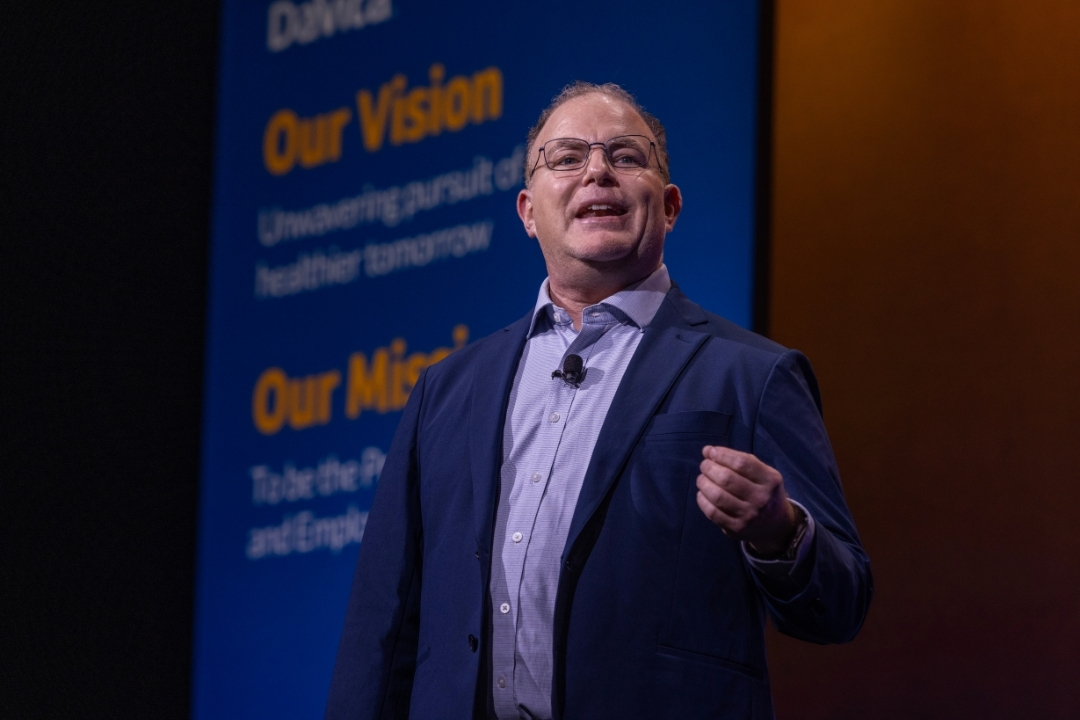
Dr. Adam Weinstein Chief Medical Information Officer for DaVita
Find more stories and multimedia from DaVita at 3blmedia.com.
Contact Info:
Spokesperson: DaVita
Website: https://www.3blmedia.com/profiles/davita
Email: info@3blmedia.com
SOURCE: DaVita
View the original press release on ACCESS Newswire:
https://www.accessnewswire.com/newsroom/en/healthcare-and-pharmaceutical/the-doctor-will-see-you-now-the-value-of-human-connection-in-ai-suppo-1155524
